





Not Your Grandmother’s Jewelry
First, let’s be clear: this isn’t about cosplay or a simple vintage revival. When a 22-year-old wears a string of pearls today, it’s not with a prim cardigan or for a formal occasion. It’s slung over a graphic hoodie, layered with chunky silver chains,
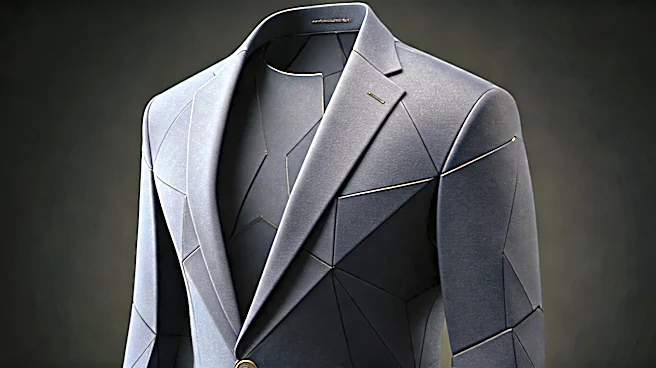
or paired with a baggy pair of cargo pants. The same goes for the brooch. It’s not anchoring a silk scarf; it’s pinned to the lapel of a thrifted blazer, the strap of a tote bag, or even a beat-up denim jacket. The power of this trend lies in the re-contextualization. By yanking these accessories from their traditional, often stuffy environments, Gen Z strips them of their old meanings and imbues them with a new, rebellious energy. The accessory itself becomes a conversation piece, a deliberate style choice that says, 'I know the rules, and I’m choosing to ignore them.'
The Red Carpet Trailblazers
Of course, this shift didn't happen in a vacuum. It was supercharged by a cohort of style icons who treated the red carpet like a laboratory for self-expression. Think Harry Styles at the Met Gala with his single pearl earring, a subtle nod to Renaissance portraiture and a giant leap for mainstream menswear. Or Timothée Chalamet, who frequently uses ornate brooches and jeweled harnesses from brands like Cartier and Louis Vuitton to punctuate his looks, treating hard-edged tailoring as a canvas for delicate ornamentation. A$AP Rocky has been a longtime proponent of pearls, wearing them with a swagger that erases any lingering 'preppy' or 'feminine' connotations. These figures act as permission slips. They take the initial risk, absorb the media chatter, and in doing so, normalize the look for millions of followers who are eager to experiment but might have hesitated to be the first.
Beyond Binary Bling
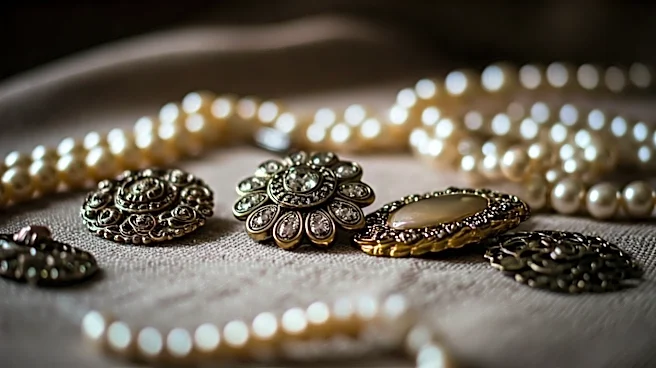
This is where we get to the core of the phenomenon: the dismantling of gendered objects. For decades, the fashion industry has operated on a simple binary: this is for men, this is for women. Pearls, with their associations with luminaries like Grace Kelly and Audrey Hepburn, were firmly in the 'women's' camp. Brooches, while having a more unisex history (think military medals and royal crests), had largely been relegated to grandmotherly attire. Gen Z, a generation more attuned to the fluidity of identity than any before it, looks at a pearl necklace and doesn't see 'feminine.' They see a beautiful object with a unique luster, shape, and history. The accessory is neutral. The idea that a rock from the sea or a piece of sculpted metal could have an inherent gender seems, to them, fundamentally absurd. Wearing a brooch isn't about a man 'borrowing from the girls'; it's about a person wearing an adornment they find compelling.
A Philosophy of Authenticity and Play
Ultimately, the Gen Z case for these accessories is rooted in a broader cultural philosophy. It’s an extension of the same impulse that drives them to thrift stores instead of fast-fashion malls. There's an appreciation for sustainability, history, and individuality. A vintage brooch has a story, a patina that can't be replicated in a factory. It’s a small act of defiance against a throwaway culture. Furthermore, it represents a move toward playfulness and away from the rigid, brand-obsessed logomania of the millennial era. Style is less about broadcasting wealth and more about broadcasting personality. It’s about creating a personal collage of meaning, mixing high and low, old and new, masculine and feminine, until the labels cease to matter and all that’s left is you.