




The Allure of the Large Sensor
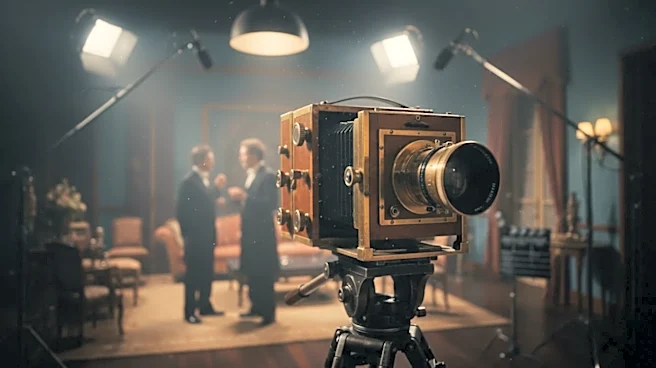
First, let's define our terms. When we talk about "giant-format" cameras, we're referring to systems with exceptionally large sensors or film negatives, like the ARRI Alexa 65 or true 15/70 IMAX film cameras. The image area on an IMAX frame, for instance,
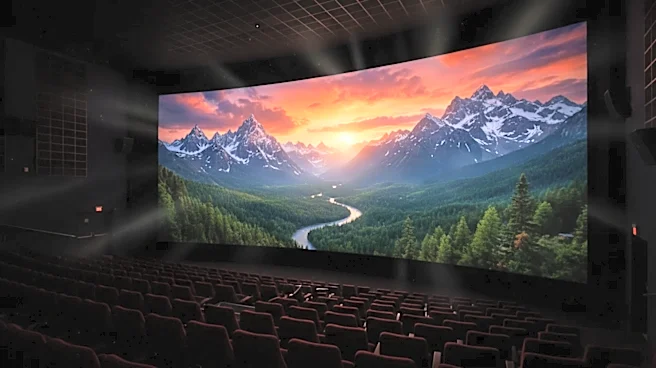
is about 10 times larger than a standard 35mm frame. This massive canvas captures staggering detail, clarity, and a sense of immersion that smaller formats can't match. Directors love this for epic vistas and explosive action, creating an experience that feels larger than life. The result is a sharp, crisp picture that can create a beautiful separation between an actor and their background, pulling the audience into the scene in a powerful way.
The Problem of Noise
The most immediate and infamous problem with using traditional IMAX film cameras for dialogue is the noise. These cameras were originally designed for documentaries and spectacles where capturing on-set sound wasn't a priority. The mechanism required to pull huge 15-perf film stock through the camera at high speed, combined with a vacuum system to keep the film flat, creates a loud roar often compared to a chainsaw or lawnmower. This makes it nearly impossible to record clean, usable dialogue during a quiet, intimate scene. While digital large-format cameras like the Alexa 65 are much quieter, the gold-standard film cameras present a huge audio hurdle. The solution is often to replace all the dialogue in post-production through a process called Automated Dialogue Replacement (ADR), which requires actors to re-record their lines in a studio—a time-consuming and expensive process that some directors, like Christopher Nolan, famously try to avoid.
The Razor's-Edge Focus Challenge
Another major cost driver is focus. A key characteristic of a large sensor is a much shallower depth of field. In simple terms, it means the slice of the world that's in sharp focus is incredibly thin. For a quiet dialogue scene, a cinematographer wants the actors' eyes to be perfectly sharp. With a large-format camera, that plane of perfect focus might be less than an inch deep. If an actor leans forward or backward even slightly, they can fall out of focus. This puts immense pressure on the focus puller, a highly skilled crew member who has to manually adjust the lens during the take. It often requires more rehearsals, more takes to get it right, and the most experienced (and expensive) crew. Every blown take costs time and money, especially when shooting on costly IMAX film stock, which can run for only three minutes per roll.
A Cascade of Compounding Costs
The expense isn't just from one or two issues; it's a cascade of them. The camera systems themselves are massive, heavy, and cumbersome. An IMAX camera can weigh over 100 pounds, and when you add a sound-dampening cover (called a "blimp"), it can approach 300 pounds. This makes camera placement and movement slow and difficult, limiting creative options for blocking a scene. The lenses required are also specialized, rare, and expensive to rent. Furthermore, the sheer amount of data generated by digital large-format sensors requires more robust and costly data storage and processing power in post-production. Each of these factors—the need for ADR, the difficulty of focus, the specialized crew, the cumbersome equipment, and the post-production workload—adds another layer of expense, turning what should be a simple setup into a major logistical and financial undertaking.