
Lesson 1: Never Stop Genre-Hopping
If there's one constant in Danny Boyle’s career, it’s change. He famously leaped from the era-defining dark comedy of ‘Trainspotting’ to the zombie-reviving horror of ’28 Days Later,’ the sci-fi tension
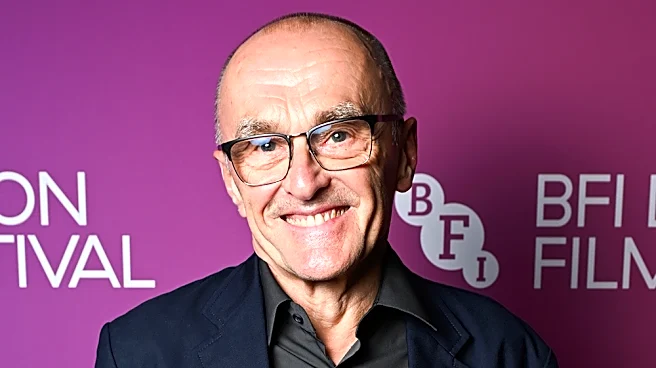
of ‘Sunshine,’ and the Oscar-winning romance of ‘Slumdog Millionaire’. His filmography is a testament to the power of refusing to be pigeonholed. At his BFI talk, he discussed his new film ‘Ink,’ a Fleet Street drama, continuing this trend. The lesson is clear: don't let one success define your entire path. True creative longevity comes from testing your skills in new arenas, forcing you to adapt and grow. For anyone feeling stuck in a professional lane, Boyle’s career is proof that moving sideways is often the best way to move forward.
Lesson 2: Embrace the Setback
Not every project is a home run, and Boyle’s career includes high-profile stumbles alongside the smashes. His recent comments about the '28 Years Later' trilogy are a prime example. After the second installment, 'The Bone Temple', underperformed at the box office, he confirmed at the BFI talk that the third film is currently on the 'back burner' due to a lack of funding. Rather than hide from the reality, he was candid about the commercial pressures of filmmaking. This echoes his journey after films like 'The Beach,' which had a mixed reception. The takeaway isn't that failure is fun, but that it's an inevitable part of a long and ambitious career. The key is to acknowledge it, learn, and pivot to the next creative challenge without losing momentum.
Lesson 3: Use Every Tool in the Box
A willingness to reinvent means staying open to new technologies and methods. During his BFI conversation, Boyle discussed his use of AI in his new movie ‘Ink,’ specifically to portray Margaret Thatcher without seeking permission from her estate. While the move proved controversial at other festival screenings, Boyle defended it as an artistic choice and another tool in the filmmaker's kit, akin to visual effects. This forward-looking, sometimes provocative, approach is what keeps his work feeling vital. The lesson isn't necessarily about adopting AI, but about maintaining a curiosity for new tools and techniques in your field. Resisting change entirely is a surefire way to become irrelevant; selective and thoughtful adoption can open new creative doors.
Lesson 4: Return to Your Roots
For all his Hollywood success, Boyle consistently returns to smaller, more personal projects and to his origins in theater. His BFI Screen Talk itself was held not in London, but in Manchester, a nod to his northern English roots and the festival's first talk outside the capital. After the global spectacle of directing the 2012 London Olympics Opening Ceremony, he didn't just chase bigger blockbusters; he made films like ‘Steve Jobs’ and eventually returned to the world of ‘Trainspotting’. This cyclical movement between massive productions and more intimate work seems to be a source of creative grounding. It’s a powerful reminder that reinvention doesn't always mean going bigger. Sometimes, it means coming home to what inspired you in the first place.
Lesson 5: Don’t Go It Alone
Boyle's career is marked by enduring creative partnerships. His work with screenwriter Alex Garland (‘The Beach,’ ’28 Days Later,’ ‘Sunshine’), writer John Hodge (‘Shallow Grave,’ ‘Trainspotting’), and actors like Cillian Murphy and Ewan McGregor are central to his filmography. Even in discussing the stalled third ‘28 Years Later’ film, he highlighted that Garland has a finished script and that Cillian Murphy is slated for a major role. This shows a deep reliance on a trusted team. Reinvention isn't a solo sport. Surrounding yourself with collaborators who challenge you, understand your vision, and evolve alongside you is crucial. Finding your 'Alex Garland' or 'Cillian Murphy'—people who elevate your work—is as important as any individual creative leap.