
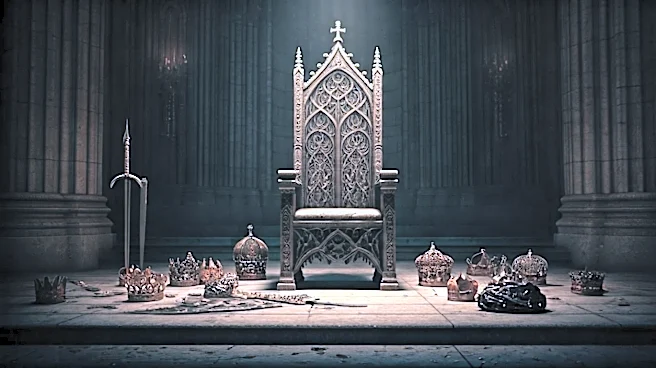


The Return of Palace Intrigue
The core of early Game of Thrones wasn't the dragons or the ice zombies; it was the whispered conversations in the corridors of power. The show thrived on political maneuvering, where a snide comment at a feast could be as deadly as a sword. House of the Dragon
understood this assignment perfectly. But instead of replicating the sprawling, continent-wide conflicts between Starks, Lannisters, and Baratheons, it shrunk the battlefield to a single, claustrophobic family. The drama is almost entirely contained within the walls of the Red Keep and Dragonstone. The conflict isn't between rival kingdoms with distinct cultures, but between a father and his brother, a daughter and her stepmother, an uncle and his nephews. This focus intensifies the political rot. We see every slight, every festering resentment, every calculated power play up close. It’s less chess on a grand map and more a knife fight in a locked room, which makes the betrayals feel more personal and the stakes feel impossibly high for the individuals involved.
A Different Kind of Shock
Game of Thrones built its reputation on shocking viewers. The execution of Ned Stark and the carnage of the Red Wedding were seismic television events precisely because they felt so unexpected. They broke the established rules of storytelling, proving no one was safe. House of the Dragon evokes that same sense of dread, but it achieves it through tragic inevitability rather than pure surprise.
We know where this is going. The source material is written, and the show’s very premise is the Targaryen civil war known as the “Dance of the Dragons.” The horror isn’t in *what* happens, but in *watching it happen*. We see the moments where peace was possible, where a kind word or a simple apology could have averted catastrophe. The death of King Viserys's son at Storm’s End isn't shocking because a dragon rider died; it's gut-wrenching because it was an accident born of foolish pride, a point of no return that seals the fate of a generation. The show trades the shock of the unexpected for the soul-crushing weight of the unavoidable.
Contained Scale, Deeper Characters
With its vast cast spread across Westeros and Essos, Game of Thrones often had to sacrifice character depth for narrative breadth. We’d spend ten minutes in King's Landing, five in Winterfell, and three on the road with Arya. House of the Dragon, by contrast, is a character study. By limiting its primary cast, it gives the story room to breathe and allows for a forensic examination of its two central women: Rhaenyra Targaryen and Alicent Hightower.
Their journey from childhood friends to bitter enemies is the series’ anchor. We witness the slow curdling of their affection, poisoned by duty, ambition, and the manipulations of the men around them. Every decision they make is layered with decades of shared history and personal baggage. This allows the show to explore themes of female agency, motherhood, and the constraints of patriarchal power with a nuance its predecessor rarely had time for. We get the “Thrones feeling” of complex, morally gray characters, but with the added richness that comes from a more intimate, novelistic focus.
Spectacle With a Purpose
Let’s be honest: dragons are cool. Both shows deliver spectacle in spades. But where the dragons in Game of Thrones often felt like a strategic trump card or a WMD, in House of the Dragon, they are an extension of the family’s power, pride, and instability. Each dragon is bonded to a specific rider, reflecting their personality. Vhagar is old, cranky, and immense, a living embodiment of Targaryen history and might. Syrax is fiercely protective of Rhaenyra.
Every flight is a political statement. Daemon’s claiming of Vermithor isn’t just a cool scene; it’s a terrifying power grab. Aemond’s pursuit of Lucerys is a fatal game of chicken between two nuclear-armed cousins. The spectacle is never just for show; it’s intrinsically tied to the characters and their escalating family feud. The power is awesome, but it's also a curse, a loaded gun in the hands of flawed, emotional people. That’s the Targaryen way, and the show nails it.