
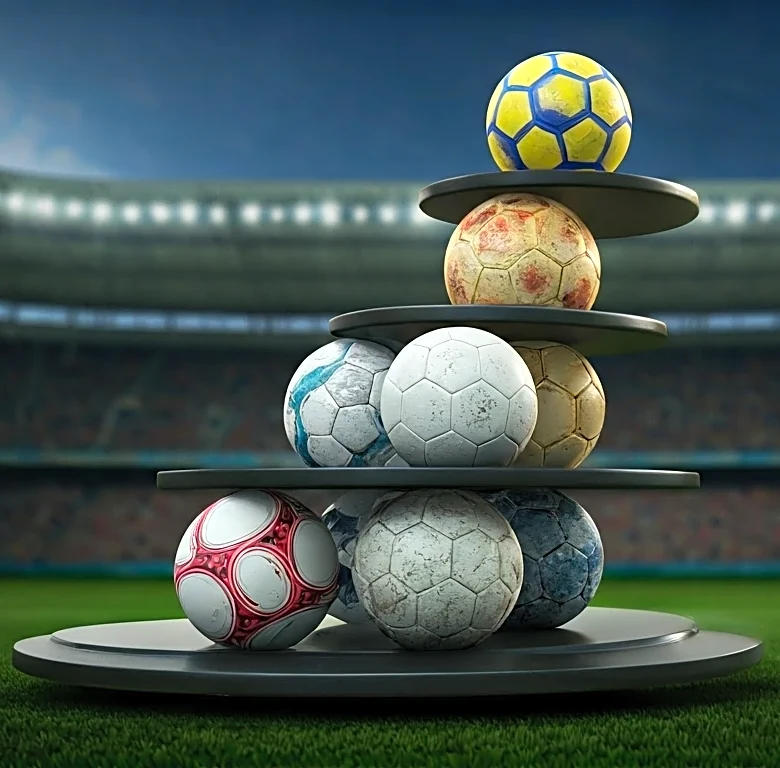





Tier S: The A-Listers We Can't Escape
These are the blue-bloods, the titans, the teams whose every move is primetime drama. Think of them as the Lakers, Yankees, or Cowboys of global soccer. This tier belongs to Brazil, with its samba-football mystique and five championships; Argentina, home
of the legendary Lionel Messi and his storybook 2022 victory; and France, the impossibly deep squad of superstars led by Kylian Mbappé. Even if you don’t follow soccer, you will know their names and see their highlights. Their games are appointment viewing, their potential failures are epic collapses, and their victories feel inevitable, until they aren't. They don't just play soccer; they are soccer culture.
Tier A: The U.S.-Centric Obsessions
This tier is all about us. It’s defined by proximity, rivalry, and shared history. First up, the USMNT itself. Every four years, the nation rediscovers its men's team, fueling hopes and anxieties that will be amplified to an extreme in 2026. Then there’s Mexico. El Tri isn’t just a rival; for millions of Mexican-Americans, it’s *the* team. The U.S. vs. Mexico dynamic is one of the most passionate in international sports, a cultural event that transcends the field. Finally, there's England. The historical baggage, the shared language, and the Premier League’s massive U.S. popularity make them our default European rival. Beating them feels special; losing to them is insufferable. These teams drive clicks, ratings, and bar arguments from coast to coast.
Tier B: The Dark Horse Everyone Adopts
Every tournament needs a Cinderella story. Americans love an underdog, and this tier is for the team that makes a shocking, glorious run deep into the knockout stages. In 2022, this was Morocco, the first African nation to ever reach a World Cup semifinal. They played with disciplined, defensive passion and became the sentimental favorite for neutrals worldwide. In the past, teams like Croatia (2018 finalist) and Costa Rica (2014 quarterfinalist) have filled this role. We don't know who it will be next, but we know they’re coming. They are the teams that remind us of the sport’s beautiful unpredictability, and their jersey becomes the trendiest item of the tournament overnight.
Tier C: The Star-Powered Solo Act
Sometimes, a team becomes a must-watch not because of its collective strength, but because of one transcendent player. This is the team with a global megastar trying to carry his nation on his back. Think of Cristiano Ronaldo’s Portugal, Son Heung-min’s South Korea, or Robert Lewandowski’s Poland. The narrative is irresistible: Can one man’s brilliance defy the odds? The on-field action becomes a compelling character study. Every touch, every shot, every pained expression when a teammate misses a chance is magnified. These teams may not win it all, but they provide unforgettable individual storylines that are easy for casual fans to grab onto.
Tier D: The Geopolitical Lightning Rod
For these teams, the story is bigger than the sport. Their presence in the tournament forces conversations about politics, human rights, and global conflict. Iran is a perennial example, with its matches often becoming a focal point for commentary on the nation’s internal politics and international relations. In 2022, their game against the United States was layered with decades of diplomatic tension. A team like Ukraine, should they qualify, would carry the weight of a nation at war, turning every game into an act of symbolic resistance. These teams don't always advance far, but they generate the most serious headlines and remind everyone that the World Cup has never been just about a game.