



A Deliberate Rejection of 80s Excess
To understand the quiet of the 90s, you first have to remember the noise of the 80s. The preceding decade was a festival of extravagance: big shoulders, loud logos, neon colors, and unapologetic wealth. Fashion was about projecting status and power. The minimalism
that followed wasn't just a style choice; it was a philosophical backlash. Spurred by economic recession and a cultural fatigue with materialism, designers and consumers craved something more authentic and restrained. The new mood was a quiet, sophisticated rebellion against the artifice of the recent past, trading flash for form and opulence for authenticity.
The High Cost of 'Simplicity'
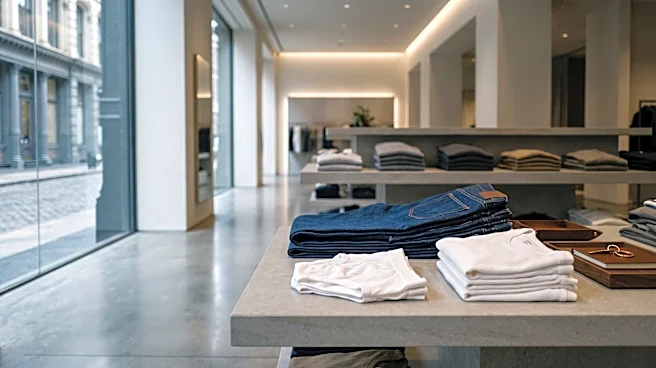
A simple white t-shirt or a black sheath dress seems democratic, but in the hands of 90s minimalists, it was anything but. The 'less is more' philosophy applied to embellishment, not quality. Designers like Jil Sander, Helmut Lang, and Calvin Klein shifted the focus of luxury from what you could see to what you could feel. The new status symbols were exquisite fabrics—cashmere, heavy silks, and technical textiles—and impeccable, architectural tailoring. One Jil Sander associate even argued her work wasn't minimalism, but 'maximalism in the care and execution'. This was a quiet luxury that whispered its expense through perfect drape and flawless construction, making it arguably more exclusive than the logo-mania it replaced.
The Body as the Main Event
With clothes stripped back to their barest essentials, the body underneath became the primary focus. The era’s pared-down silhouettes were designed to emphasize long, clean lines, skimming the body rather than overwhelming it. This gave rise to the controversial 'heroin chic' aesthetic, personified by the waif-like figures of models like Kate Moss. The look was characterized by extreme thinness, pale skin, and an androgynous quality that stood in stark contrast to the athletic, vibrant supermodels of the 80s like Cindy Crawford. The clothes—fitted tees, slip dresses, and straight-leg trousers—demanded a specific, often unforgiving, physique, making the body itself the most crucial and demanding accessory.
An Attitude of Studied Indifference
Perhaps the most complex layer of 90s minimalism was the attitude required to pull it off. The goal was to look effortlessly cool, a state that ironically required a great deal of effort. The aesthetic was as much about a mindset as it was about the clothes themselves. It was a cultivated nonchalance, a quiet confidence that suggested you were above the fray of fleeting trends. The iconic advertising campaigns from brands like Calvin Klein rarely showed models smiling; instead, they projected a raw, intimate, and often moody detachment. This 'unbothered' look became the ultimate status symbol, a performance of authenticity that was meticulously crafted to appear un-crafted. The simplicity was a front for a highly sophisticated cultural code.