




A Fateful Partnership on Schindler's List
Every great collaboration has an origin story. For Spielberg and Kamiński, it began in 1993 with *Schindler's List*. Spielberg, seeking a fresh, stark look for his passion project, was struck by the raw, European sensibility of Kamiński’s work. The Polish-born
cinematographer delivered a masterpiece of chiaroscuro, using high-contrast black-and-white to create a look that felt both like a historical document and a waking nightmare. The film not only won them both Oscars but also established the foundation of their visual language. Kamiński wasn't just lighting scenes; he was channeling theme, stripping away color to find a more profound truth in the shadows. This first project proved they were a perfect match: Spielberg, the master of emotional storytelling, and Kamiński, the artist who could paint those emotions with light itself.
The Power of Light
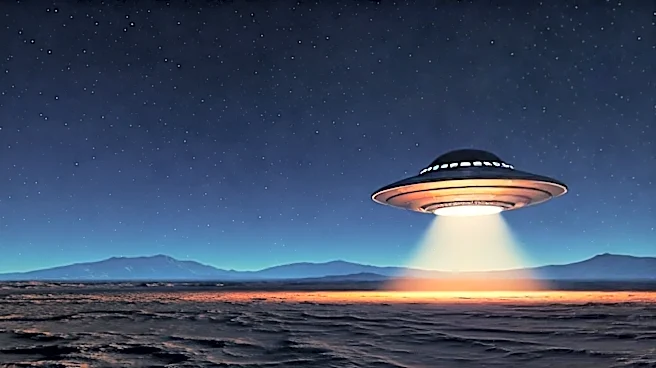
If there is one signature element of the Spielberg-Kamiński look, it is the light. Not just any light, but powerful, often overexposed beams that slice through the darkness. It’s what fans call “God light.” You see it in the alien ships of *War of the Worlds*, cutting through the mist with terrifying precision. You see it in *Minority Report*, where sterile white light floods futuristic rooms, suggesting a society with no place to hide. And you see it in *Lincoln*, where shafts of dusty sunlight pour into the White House, as if illuminating history itself. This isn't just an aesthetic tic. Kamiński uses this over-bloom—a technique where light sources are so bright they blow out the details—to create a sense of the otherworldly, the divine, or the profoundly threatening. Light in their films is an active character, capable of representing hope, judgment, or an unknowable, awesome power that dwarfs humanity.
The Atmosphere of Fog
Where there is light in a Spielberg-Kamiński film, there is often something for it to cut through. Enter their second key ingredient: atmosphere. Haze, smoke, fog, and rain are ever-present, serving multiple purposes. On a technical level, pumping smoke into a set (a technique called “hazing”) allows light beams to become visible, giving them texture and shape. It adds depth to the frame, separating the foreground from the background and making the world feel larger and more mysterious. But thematically, it’s even more crucial. Think of the smoke-choked battlefields of *Saving Private Ryan*, where the chaos of war becomes a literal fog. Or consider the perpetual misty dampness of *A.I. Artificial Intelligence*, which enhances the film’s melancholic, fairy-tale quality. This atmosphere isn’t just weather; it’s a mood-setter, obscuring information, creating suspense, and wrapping the world of the film in a blanket of uncertainty and wonder.
The Language of Fear and Awe
Light and fog are the tools, but what do they build? In Spielberg’s hands, they build fear, awe, and a very specific kind of cinematic dread. The duo’s visuals excel at the “reveal.” They understand that what you *don’t* see is often scarier than what you do. The light from an unseen source, slicing through the fog, hints at a presence before it's shown. In *War of the Worlds*, the first appearance of a Tripod is preceded by unnatural lightning and the glow of its heat ray—we experience its power before we see its form. The D-Day landing in *Saving Private Ryan* uses a desaturated color palette and lens flares from explosions to create a visceral, documentary-style horror that feels terrifyingly immediate. Kamiński’s camera doesn't just observe; it recoils. It shakes, it gets splashed with mud and blood, making the audience feel like a participant in the terror, not just a spectator. This combination of majestic light and obscuring fog creates a tension between the beautiful and the terrifying—a hallmark of Spielberg’s greatest work.