




The Ghost of Trends Past
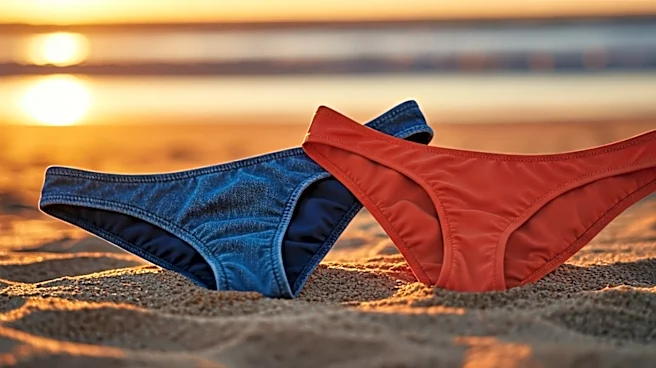
Just when Millennials thought they were safe, it returned. Creeping back into online stores and influencer feeds alongside butterfly clips and tiny shoulder bags is the undeniable silhouette of the early 2000s: the low-rise bottom. On a bikini, this translates
to a cut that sits not on the natural waist, or even comfortably on the hips, but precariously low, often revealing a strip of torso most thought they’d left behind with their flip phones. This revival is part of the larger Y2K fashion boom, a phenomenon where Gen Z has enthusiastically adopted the aesthetics of a decade they barely remember. For them, it’s vintage, ironic, and cool. For the generation that lived through it the first time, it’s something else entirely.
For Millennials, a Traumatic Flashback
To understand the visceral Millennial reaction, you have to remember the cultural climate of the early 2000s. This wasn't just a trend; it was a mandate. Low-rise jeans, pants, and swimwear dominated, and they were designed for a very specific, very narrow body type: the ultra-thin, “size zero” ideal personified by celebrities on the covers of tabloids. There was no body positivity movement to offer a counter-narrative. Instead, there were ruthless “Worst Dressed” lists and a pervasive pressure to shrink oneself to fit the clothes, not the other way around. The low-rise cut was unforgiving, demanding a flat stomach and what were then called “hip bones.” For millions of young women navigating puberty and self-esteem, this look was less a fashion choice and more a constant, uncomfortable reminder of how their bodies failed to measure up. The return of the low-rise swim bottom feels less like nostalgia and more like the return of a deeply ingrained anxiety.
For Gen Z, a Blank Canvas
Gen Z, on the other hand, approaches the low-rise bottom with a sense of playful detachment. Having grown up in an era with a more developed (if imperfect) language around body positivity and inclusivity, the toxic baggage of the early 2000s simply isn’t attached. For them, the low-rise cut is just one aesthetic among many. It can be paired with an oversized t-shirt, styled ironically, or worn with a confidence born from a culture that—at least in theory—encourages people to wear what makes them feel good. They see the swimsuits on social media, divorced from the punishing media landscape that originally popularized them. It's a vintage curiosity, a fun throwback, not a tool of body-shaming. It’s the sartorial equivalent of finding an old vinyl record; you can appreciate the sound without having lived through the era it defined.
It’s Not About the Swimsuit
Ultimately, the generational divide over a few square inches of fabric isn’t really about the swimsuit at all. It’s a perfect case study in how our personal and collective histories shape our perception of the world. Millennials are reacting to a memory—a time of intense body scrutiny and limited ideals of beauty. Their hesitation is a protective instinct, a recoiling from a trend that carries the phantom pains of their youth. Gen Z is reacting to an image—a disembodied aesthetic they are free to reinterpret and redefine on their own terms. The friction between these two viewpoints reveals how much has changed, and how much hasn't. While the conversation around body image has evolved significantly, the cyclical nature of fashion proves that these trends, and the anxieties they can provoke, are never truly gone for good.