







More Than Just an Entrance
In film, a door is never just a door. It's a threshold between the known and the unknown, safety and danger, or one world and another. This symbolism is a powerful storytelling shortcut. An open door can be a welcoming invitation, while a locked one can represent
distrust or a character's refusal to connect. Filmmakers lean on this built-in meaning, using the apartment door as a focal point for our anxieties. It separates the private, controlled space of a home from the unpredictable world outside. Every knock, every rattle of the handle, plays on our fundamental need for security, making the door itself a character in the drama.
The Anatomy of a Threatening Door
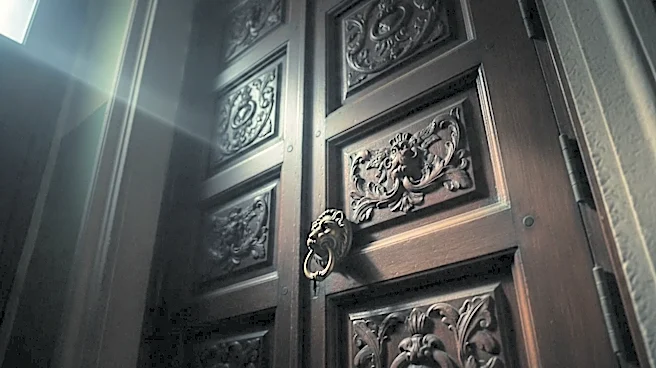
The real trick lies in how the camera transforms this mundane object into a source of dread. It’s a combination of deliberate choices. A low-angle shot, looking up at the door, can make it feel monolithic and intimidating, giving it a sense of power over the character. Conversely, a high angle looking down on a character waiting outside can emphasize their vulnerability. Lighting is also crucial. By placing a single, harsh light inside the room, a filmmaker can create a mysterious silhouette in the doorway, hiding their intentions. This technique, rooted in the high-contrast style of film noir, plays on our fear of what we can't see. Even a sliver of light from under the door focuses our attention and builds immense anticipation for what lies behind it.
The Power of the Canted Angle
For an extra dose of psychological unease, directors often employ the Dutch angle, also known as a canted or oblique angle. By tilting the camera so the vertical lines of the door and frame are slanted, the entire composition feels off-balance and unstable. This technique, which originated in German Expressionist cinema of the 1920s, is a direct visual cue to the audience that something is deeply wrong. It mirrors a character’s psychological distress, confusion, or the chaos of a situation. When a character approaches a doorway shot with a Dutch angle, we instinctively feel the world is off-kilter, priming us for a disorienting or dangerous encounter before the door even opens.
Case Files From the Big Screen
This collection of techniques is visible across genres. In horror films, a slow dolly-in on a doorknob ratchets up the tension to an almost unbearable degree, holding the audience in a state of anxious anticipation. In thrillers like "Parasite," doors are used to visually represent and enforce the stark class divisions between the families. In the world of science fiction, like "The Matrix," a door can become a literal portal, with the choice to walk through it representing a monumental, fate-altering decision. Even comedies use door framing for effect; think of the constant, jarring entrances through Jerry's apartment door in "Seinfeld," which establish a sense of chaotic community. These examples show how a director’s choices can turn a simple doorway into a visual telegraph, signaling to the audience where the story is about to go.