





The High Priest of Genre
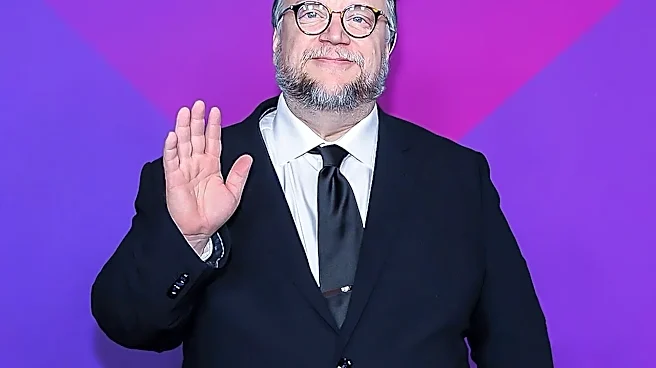
Watch Guillermo del Toro at any public speaking event—a Comic-Con panel, a film festival masterclass, a museum talk—and you’ll notice he treats the moment not as a promotional obligation, but as a sermon. He speaks about filmmaking with the gravity of
a philosopher and the passion of a true believer. For del Toro, genre fare like horror, fantasy, and sci-fi isn’t a lesser form of cinema; it's a sacred space for exploring what it means to be human. He positions himself as its high priest, defending the artistry of monster movies and fairy tales against a perceived world of cynicism. During these talks, he rarely sticks to simple on-set anecdotes. Instead, he connects the wires between ancient folklore, religious iconography, classic literature, and his own work, elevating a discussion about a movie into a lesson on the history of human storytelling itself.
Monsters as Patron Saints
Central to the del Toro mythology is his profound, almost spiritual love for monsters. He has said he identifies with them, seeing them as “patron saints of imperfection.” In his talks, he speaks of Frankenstein's monster with the pity one might reserve for a martyr. His creatures, from the Pale Man in Pan's Labyrinth to the amphibian man in The Shape of Water, are not just antagonists; they are misunderstood outsiders, reflections of our own fragility and longing for connection. At fan events, he unpacks their symbolism with such sincerity and intellectual rigor that they cease to be mere special effects. They become tangible metaphors for social struggles, loneliness, and the beauty found in things the world deems ugly. By treating his monsters with this level of reverence, he invites his audience to see them—and him—as existing on a higher plane of creative and emotional truth.
Sharing the Sacred Relics
A key part of mythmaking is the production of tangible artifacts, and del Toro is a master of this. His creative process is made physical for fans through his famously detailed notebooks, which he shares in books like Cabinet of Curiosities. These are not just collections of sketches; they are presented as sacred texts, filled with his unique scrawl, arcane symbols, and the very DNA of his cinematic worlds. Similarly, the traveling museum exhibition At Home with Monsters literally welcomed fans into his inspirational space, surrounding them with the art, books, and life-sized figures that fuel his imagination. These projects do more than just offer a behind-the-scenes peek. They transform his private obsessions into a public mythology. By allowing fans to see the “relics” of his process, he turns them from passive viewers into active participants in his curated universe.
The Benevolent Patron
Del Toro also uses his platform to expand his mythology by anointing others. In his Netflix series Cabinet of Curiosities, he didn't direct the episodes but acted as a curator and host, using his name and aesthetic to elevate other horror directors. He is famously generous with his collaborators and vocal in his support for the crafts of animation, practical effects, and production design. At events, he frequently champions the artists who help build his worlds, from actor Doug Jones, who has physically embodied many of his creatures, to the animators on his stop-motion version of Pinocchio. This has the dual effect of showing immense respect for the collaborative nature of film while also positioning himself as the benevolent, Oz-like figure at the center of it all—the one who brings these talented people together and gives their craft its deepest meaning.