




What Is ‘Editing Rhythm’ Anyway?
Let’s get one thing straight: when we talk about editing rhythm, we’re not just talking about how fast the cuts are. Any blockbuster can slice a fight scene into a million incomprehensible pieces and call it ‘kinetic.’ That’s not rhythm; that’s just noise.
Real editing rhythm is the lifeblood of an action sequence. It’s the deliberate pattern of shots—their length, their sequence, their juxtaposition—that creates a specific, gut-level feeling in the audience. Think of the difference between the frantic, disorienting cuts of the *Bourne* films, designed to put you inside Jason Bourne’s panicked mind, and the long, graceful, and utterly exhausting takes in *John Wick*, which emphasize his lethal proficiency and the physical toll of his rampage. George Miller’s *Mad Max: Fury Road* is a masterclass in this, using a staccato, center-framed rhythm to create action that is both lightning-fast and perfectly clear, making the mayhem feel like a brutal rock opera.
The ‘Woman of Tomorrow’ Problem
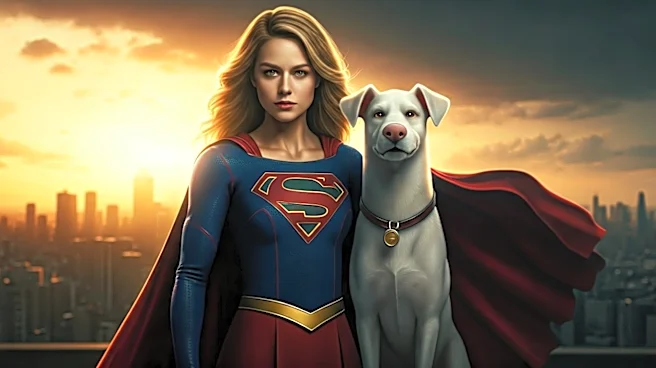
This brings us to Kara Zor-El. The upcoming film is based on Tom King and Bilquis Evely’s stunning comic series, *Supergirl: Woman of Tomorrow*. If you’re expecting the bubbly, optimistic Girl of Steel from other adaptations, you’re in for a shock. This version of Supergirl is turning 21, stranded in the cosmos, and filled with a quiet, simmering rage. She’s seen horrors her famous cousin never has, and she’s tired. The story is a sci-fi western, narrated by a young alien girl whom Supergirl begrudgingly helps on a quest for vengeance. The action is sparse but shocking, and the tone is deeply introspective and melancholy. It’s a story less about what Supergirl can do and more about who she is when no one is watching. The challenge for the movie is immense: how do you portray a character’s internal emotional landscape—her weariness, her fury, her profound loneliness—in the middle of a planet-shattering punch-up?
The Right Team for the Job
Fortunately, the creative choices so far suggest DC Studios understands the assignment. The film is being helmed by Craig Gillespie, the director behind *I, Tonya* and *Cruella*. Gillespie is an expert at building films around complex, spiky female protagonists and using a distinct visual and editorial style to reflect their inner worlds. *I, Tonya* used aggressive cuts, fourth-wall breaks, and conflicting perspectives to immerse us in the chaos of Tonya Harding’s life. Furthermore, casting Milly Alcock, fresh off her star-making turn as the young, resentful, and powerful Rhaenyra Targaryen in *House of the Dragon*, is a masterstroke. Alcock proved she can convey immense internal turmoil with just a glare, communicating a deep well of pain and anger that feels perfect for this specific version of Kara.
Making Every Punch Matter
This is where editing rhythm becomes the film’s most critical tool. The movie can't just show us Supergirl is strong; it has to make us *feel* the weight behind her power. When she throws a punch, the editing can’t just be a blur of motion. Will the rhythm be quick and furious, mirroring her rage? Or will a cut linger for a split-second too long on her face after she delivers a blow, showing us the exhaustion or regret in her eyes? A fight scene could be intercut with flashbacks to Krypton’s destruction, not as clumsy exposition, but as a rhythmic, percussive reminder of the trauma that fuels her. The silence *between* the explosions will be just as important as the noise. The pacing of the cuts needs to be the cinematic equivalent of the comic’s poetic narration—guiding our emotional journey through the violence, not just our eyes.