




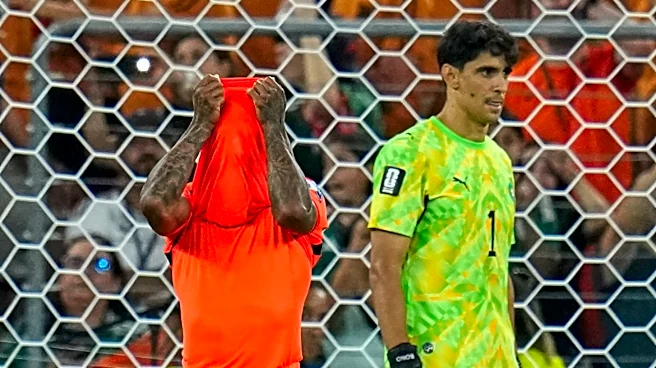


A Sudden, Deafening Silence
In both soccer and football, the normal flow is a fluid, 11-on-11 battle of territory and tactics. But when a foul is committed just outside the 18-yard box or the offense stalls on fourth down, everything changes. The game transforms from a team sport
into a solitary trial. The clock may or may not be running, but time feels suspended. The collective energy of thousands of fans, teammates, and opponents funnels onto the shoulders of one individual. This sudden stillness—the break from frantic action—is what creates the initial spike of drama. It’s a manufactured duel, a pause in the chaos that allows the pressure to build to an almost unbearable level.
The Specialist's Burden
The player stepping up to the ball is often a specialist. In the NFL, the placekicker is a unique role; many have backgrounds in soccer and do little else but practice their highly specific craft. They are separate from the team's main offensive and defensive units, brought on only for these high-stakes moments. Similarly, while many soccer players can take a free kick, every top team has its designated artist—a player revered for their ability to bend the ball over a wall or fire a “knuckleball” shot that deceives the keeper. Think of legends like David Beckham, Juninho Pernambucano, or Cristiano Ronaldo. Like the NFL kicker, they carry a unique burden. Their success is isolated and celebrated, but their failure is stark, public, and has nowhere to hide.
The Geometry of Hope
Both acts are exercises in applied physics. The soccer player analyzes the distance, the angle, and the defensive wall of jumping opponents. They must calculate the precise speed and spin needed to lift the ball over the wall and make it dip back down under the crossbar—a feat of biomechanics involving the approach angle and a complex sequence of hip and leg motion. The NFL kicker faces a different set of variables. They must get the ball high enough, quickly enough (in about 1.3 seconds) to clear the outstretched arms of massive linemen, all while accounting for wind and the placement of the holder. The shape of the American football makes its flight less predictable than a soccer ball's, adding another layer of difficulty. In both cases, it's a battle against physics where mere inches separate glory from disappointment.
An All-or-Nothing Universe
What makes these moments truly “clutch” is their binary outcome. There is no partial credit. A free kick either finds the back of the net or it doesn't. A field goal either sails through the uprights or it misses. This all-or-nothing nature is the core of the psychological pressure. While a quarterback can throw an incomplete pass and get another chance on the next down, these kicks are often the final word. A game-winning field goal as time expires, like those famously made by Adam Vinatieri in the Super Bowl, ends the contest definitively. A 90th-minute free kick to equalize or win, like Beckham's legendary strike against Greece in 2001, serves the same dramatic purpose. The result is immediate and irreversible.
Forging a Legacy in a Single Swing
Ultimately, these moments feel the same because they tap into a universal narrative of individual accountability under extreme pressure. Athletes speak of entering a “flow state” where they can block out distractions and rely on muscle memory honed over thousands of hours of practice. But for fans, it’s a shared moment of held breath and explosive release. We remember these kicks because they create lasting images that define careers and championships. The sight of Roberto Carlos' physics-defying goal against France or Harrison Butker's Super Bowl-winning kick becomes iconic. They are the perfect distillation of sporting drama: one ball, one player, one chance to become a hero.