








1. It Matches the Game's Rhythm
American football is a stop-and-start affair. The average NFL game is over three hours long but contains only about 18 minutes of actual action. This leaves massive lulls for grabbing a plate of saucy wings, sitting down with a bowl of chili, or loading
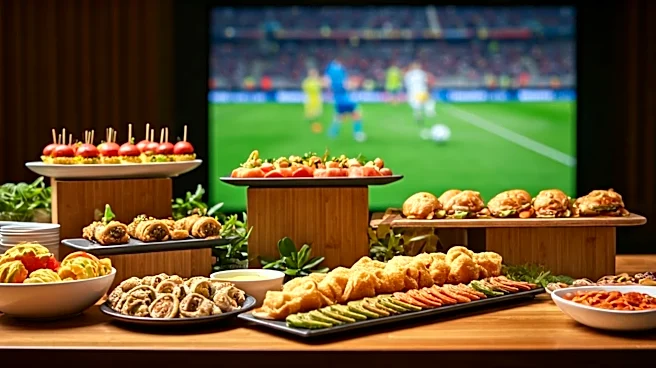
up on seven-layer dip. It’s a game of strategic pauses, and our food reflects that.Soccer is the opposite. It’s 45 minutes of continuous, fluid motion, a short halftime break, and then another 45 minutes of the same. There are no commercial timeouts, no prolonged huddles. The tension builds without release. You can’t risk missing a brilliant counter-attack because you were trying to spoon chili into a bowl. A soccer buffet, built around small, easily grab-able items, is designed for this flow. You can snag a meat pie or a skewer from the spread without taking your eyes off the screen, making it the perfect culinary companion for a sport that demands your constant attention.
2. It Embraces Global Flavors
Let’s be honest: the traditional American sports spread can be a bit monotonous. It’s delicious, but it’s predictable. Wings, pizza, nachos, repeat. A World Cup or Euros tournament is, by its nature, a global festival. Why shouldn’t the food be, too? A soccer buffet is an excuse to escape the tyranny of ranch dressing and explore the world.Imagine a table laden with Argentine empanadas, Spanish patatas bravas, German pretzel bites with mustard, Japanese karaage (fried chicken), and Brazilian pão de queijo (cheese bread). Instead of one heavy, homogenous flavor profile, you get a vibrant tapestry of tastes. It turns the party into a culinary journey that mirrors the international spirit of the competition itself, giving guests a fun, low-stakes way to “root” for different cuisines.
3. It's Built for Grazing, Not Gorging
Major soccer tournaments are all-day affairs, often with two or three matches scheduled back-to-back. A typical sports spread is designed for a single event; it’s heavy, rich, and often looks worse for wear after 90 minutes. Hot dips congeal, wings get cold, and soggy chips are abandoned.A buffet of small plates, however, is built for endurance. These items are meant to be enjoyed at room temperature or can be easily refreshed in batches. This encourages grazing over several hours, allowing guests to eat at their own pace throughout a triple-header. It prevents that all-too-familiar food coma that sets in after the first quarter of the Super Bowl, keeping the energy levels high for the final match of the day.
4. It Fosters a More Social Atmosphere
The geography of a classic sports party is static: everyone finds a prime seat on the couch and hunkers down. The food station is a place you visit, load up, and retreat from. A soccer buffet changes that dynamic. Because the food is composed of small, handheld bites, it encourages guests to stand, mingle, and move around the room.The buffet table becomes a social hub rather than just a refueling station. People gather, discuss the game, debate whose national snack is superior, and drift between conversations. It breaks the passive, face-forward viewing experience and creates a more communal, interactive party atmosphere—much like you’d find in a pub in London or a plaza in Madrid during a big game.
5. It's Cleaner and More Practical
Here's a simple truth: wings are messy. So is chili. And loaded nachos. These are not foods designed for moments of sudden, explosive joy or despair. No one wants to send a glob of blue cheese dressing flying when their team scores a last-minute winner. The anxiety of spilling on the couch (or a friend’s jersey) is real.A well-curated soccer buffet prioritizes neatness. Think skewers, mini quiches, sausage rolls, arancini, or spring rolls. These are foods that can be eaten in one or two bites with minimal risk of drips, drops, or collateral damage. It frees up your hands and your mind, letting you celebrate, gesture wildly, and pace nervously around the room without leaving a trail of culinary destruction in your wake. Less mess during the game means less cleanup after, which is a victory for any host.