





Animation as Narrative
The 2016 'Moana' isn't just a great story; it’s a masterclass in using animation as a narrative tool. The entire film is built on a flawless three-act structure where every beat, every emotion, and every character moment is amplified by its medium. Think
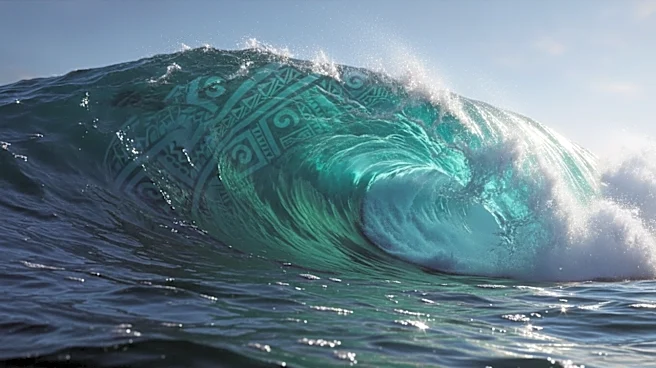
about the opening sequence: Gramma Tala tells the legend of Maui and Te Fiti, illustrated with living tapa cloths. This isn't just exposition; it’s world-building, character introduction, and thematic foreshadowing all rolled into one visually dynamic package. The ocean itself is a character, expressing personality in a way that’s charming in animation but risks looking like a formless CGI blob in live-action. The film’s pacing is relentlessly efficient because animation allows for seamless transitions and visual shorthand that live-action struggles to replicate. Changing this isn't as simple as just filming the same scenes with real actors; it requires reinventing the film's fundamental language.
The Awkwardness of Realism
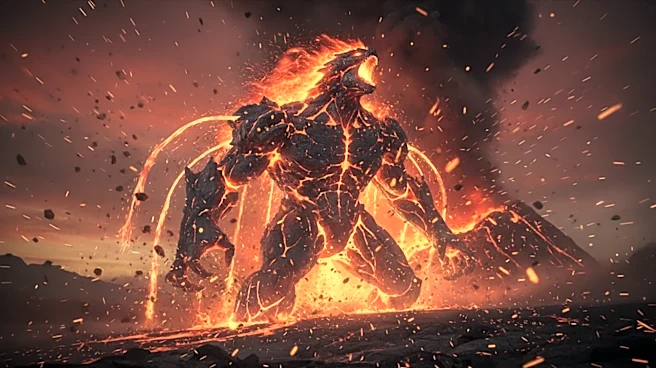
Many of Disney’s live-action remakes have stumbled when trying to translate animated magic into the real world. The hyper-realistic animals in 'The Lion King' were criticized for their inability to convey the same emotion as their 2D counterparts, turning iconic musical numbers into soulless displays. 'Moana' faces an even greater challenge. Maui, voiced in both versions by the charismatic Dwayne Johnson, is a prime example. His powers of shapeshifting and his animated tattoos, which act as his conscience and comic relief, are central to his character arc. In animation, this is fluid and expressive. In live-action, it threatens to become either a distracting CGI spectacle or an awkward, clunky effect that pulls audiences out of the story. The musical numbers also pose a problem. 'You're Welcome' is a showstopper precisely because it’s a whirlwind of animated bravado. A live-action rendition risks feeling static and less magical by comparison, a problem that has plagued other Disney remakes.
The Unwinnable Remake Game
Disney's live-action strategy is caught in a catch-22. Remakes that are too faithful, like 'The Lion King', are often called pointless cash grabs. Those that deviate too much, like 'Mulan', are accused of disrespecting the source material. 'Moana' is uniquely trapped because its structure is so tight and beloved. The original screenplay by Jared Bush, who is also co-writing the remake, is a perfect hero's journey. Moana’s internal struggle, her relationship with Maui, and her ultimate realization are all perfectly interwoven. To succeed, the new film can’t just copy these beats, as that would feel hollow. But altering them risks unraveling the very threads that made the story so powerful in the first place. The original film's core journey is about Moana finding out who she is, and that story is told not just through dialogue, but through the visual and musical language of animation.
Finding a New Cinematic Language
The challenge for director Thomas Kail, known for 'Hamilton', isn't to simply recreate 'Moana' but to translate it. This means finding a new cinematic language that works for live-action. Where animation used fluid, larger-than-life visuals, the remake might need to lean more into the raw, physical environment of Hawaii, where the film is being shot. The emotional weight carried by a cartoon ocean might have to be transferred to the performance of the new Moana, Catherine Laga’ia, and her interactions with Johnson's Maui. The narrative function of Maui's tattoos might require clever dialogue or more subtle physical storytelling from Johnson, who has spoken about the personal connection he feels to the character, inspired by his own grandfather. Success won't be measured by how much the remake looks like the original, but by how it makes us feel. It has to rediscover the story's soul without simply tracing its body.