
Micklewhite's Fine Goods
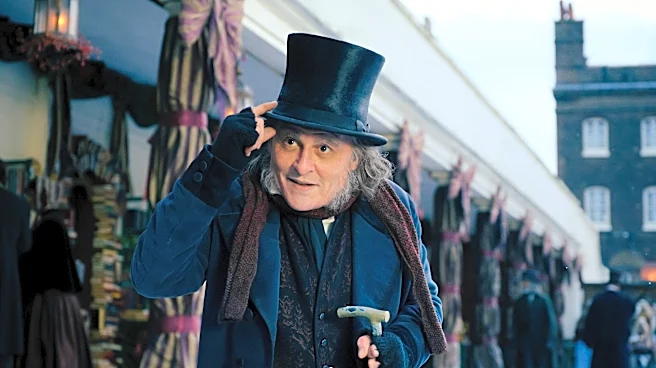
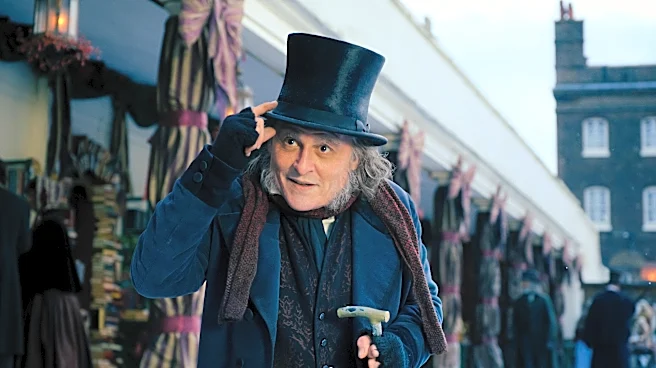
During the film's joyous finale, as a reformed Scrooge sings 'Thankful Heart' and dances through the London streets, keep your eyes on the shopfronts. For a fleeting moment, he passes a store named 'Micklewhite's'. This isn't just a random Dickensian
name; it's a tribute to the film's star. Michael Caine was born Maurice Micklewhite. The production design team slipped in this clever nod to the legendary actor who agreed to play his role with the seriousness of a Royal Shakespeare Company performance, giving the film its grounded emotional core.
A Familiar Pair of Hecklers
In Charles Dickens's novel, Scrooge is haunted by the ghost of his single business partner, Jacob Marley. For the film, a second brother, Robert Marley, was invented for one simple reason: to cast the Muppets' iconic hecklers, Statler and Waldorf. Their song 'Marley and Marley' is a highlight, but the gag goes deeper. When Scrooge visits the past, you can spot younger versions of Statler and Waldorf heckling Fozziwig from a balcony. Later, during the finale, a storefront bearing the name 'Statler and Waldorf' can be seen, cementing their place in this version of London.
The Shooting Star Tribute
The Muppet Christmas Carol was the first Muppet film made after the death of their visionary creator, Jim Henson, and the film is dedicated to his memory. Director Brian Henson, Jim's son, included a subtle and touching tribute. At the end of the song 'One More Sleep 'til Christmas', Kermit as Bob Cratchit looks up at a shooting star. This is a direct visual callback to a similar scene in 1979's 'The Muppet Movie', where Kermit sits alone in the desert and sees a shooting star. It became a recurring motif in later Muppet films, a quiet nod to their founder's legacy.
Gonzo's Poultry & Other Punny Shops
The London streets are filled with businesses named after Muppets, a tradition for the franchise. As Scrooge makes his way through the city on Christmas morning, a sharp eye can spot a plethora of clever signs. Besides 'Micklewhite's' and 'Statler and Waldorf', there is a poultry shop with a sign featuring Gonzo's distinct profile. Other background details include signs for a 'Grapes Tavern', which is a nod to a real, historic London pub that Charles Dickens himself used to frequent. These details create a rich, lived-in world that feels both authentically Victorian and uniquely Muppet-like.
The Shivering Bunny
Bean Bunny, a minor but beloved Muppet character, gets a recurring, heart-tugging role. We first see him shivering in the cold, asking Scrooge for a penny. His plight is a small but effective way to establish Scrooge's cold-heartedness early on. He appears again later as one of the carolers. But his story gets a happy ending. On Christmas morning, it's Bean Bunny who Scrooge tasks with buying the prize turkey from the poultry shop, paying him handsomely for his trouble. It’s a small arc that adds to the film's overwhelming sense of holiday cheer.
Beaker Gets The Last Word
When the charity collectors, played by Dr. Bunsen Honeydew and Beaker, are aggressively dismissed by Scrooge, the scene has a famously subtle gag. As the timid Beaker exits the office, he turns and raises a single finger toward Scrooge. While often misremembered as a rude gesture, a closer look reveals he is simply pointing in exasperation. However, a different behind-the-scenes story notes that during one take, Beaker let out his signature 'Meep!', which caused Michael Caine to break character and laugh for the only time during the entire production.