



The Way It Was: Art vs. Commerce
For decades, a clear, if unwritten, rule governed the film world. Hollywood produced blockbusters and star-driven commercial hits. Prestigious European film festivals like Venice and Cannes, on the other hand, celebrated "cinema"—the work of auteurs,
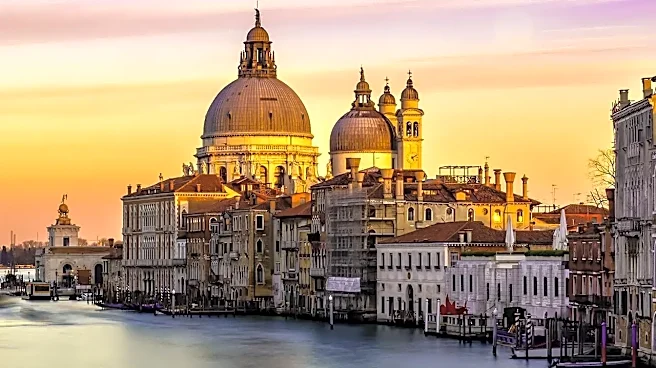
often featuring challenging narratives and a style far removed from mainstream American tastes. Venice, founded in 1932, was the oldest and one of the most respected of these platforms. While American films occasionally appeared, the festival's primary identity was tied to international and art-house directors. The idea that a major Hollywood studio would use the Lido as the strategic starting point for a major awards campaign was, for a long time, simply not how the game was played.
A Strategic Pivot on the Lido
By the early 2010s, Venice faced a challenge. It was struggling to attract major American films, which were often opting for the less expensive and logistically simpler Toronto International Film Festival as a North American-friendly launchpad. When Alberto Barbera began his second tenure as artistic director in 2012, he made a concerted effort to bring Hollywood back, renovating facilities and actively courting studio heads in Los Angeles. He understood that losing the glamour and media power of Hollywood studios posed a significant risk to the festival's global standing. His efforts found spectacular success in 2013 with the world premiere of Alfonso Cuarón's "Gravity." The visually stunning space thriller, starring George Clooney and Sandra Bullock, was a major studio picture that received rave reviews in Venice and went on to win seven Academy Awards, cementing the festival as a newly powerful player in the Oscar race.
The Decade of the Oscar Launchpad
What followed "Gravity" was a near-unbroken string of successes that solidified Venice’s reputation as the premier launchpad for awards season. The festival premiered three future Best Picture winners in a row: "Birdman" (2014), "Spotlight" (2015), and "La La Land" (2016), which opened the festival and earned Emma Stone the Volpi Cup for Best Actress before winning six Oscars. The trend continued with Guillermo del Toro's "The Shape of Water" (2017) and Chloé Zhao's "Nomadland" (2020), both of which won the festival's top prize, the Golden Lion, before winning the Oscar for Best Picture. Other major contenders like "A Star Is Born," "The Favourite," "Roma," and "Joker" all used a Venice premiere to build critical momentum that carried them through awards season. The connection became undeniable: a premiere on the Lido was now one of the most potent weapons in an Oscar campaign.
A Perfectly Symbiotic Relationship
The arrangement proved to be mutually beneficial. For Hollywood studios, Venice offered a platform of unparalleled prestige. Launching a film at the world's oldest festival provided an immediate stamp of artistic credibility, separating their awards hopefuls from the summer blockbuster crowd. As Barbera noted, the unmatched glamour of the Italian setting—the hotels, the food, the red carpet—was a powerful draw for talent. For Venice, the influx of Hollywood productions brought global media attention, star power, and a renewed sense of relevance. The festival wasn't just showing important films; it was anointing them. This became even more critical as streaming giants like Netflix sought to legitimize their own film slates, using Venice to premiere prestige projects like "Roma" (2018), which won the Golden Lion and became the first film from a streamer to win at a major festival.
The New Definition of Prestige
The result of this decade-long shift is a cinematic landscape where the old boundaries are almost entirely gone. Hollywood's most celebrated "prestige" films now frequently possess the DNA of arthouse cinema—auteur-driven, stylistically bold, and thematically ambitious. Films like "Joker," a dark character study based on a comic book character, and "Poor Things," a surrealist comedy, won the Golden Lion and went on to major Oscar success, proving that Venice could launch both critical darlings and billion-dollar blockbusters. The festival has become a space where a gritty comic book adaptation can be celebrated with the same reverence as a quiet, independent drama. It reflects a broader industry trend where the most successful films are often those that manage to be both artistically compelling and commercially appealing.