



First, Let’s Be Clear: It Wasn’t Panned
Contrary to the headline's premise, Aladdin was a massive critical and commercial success. It was the highest-grossing film of 1992, and most reviewers were dazzled. Critics like Roger Ebert and Gene Siskel gave it enthusiastic reviews, with Siskel even
suggesting Robin Williams deserved an Oscar nomination for his voice work as the Genie. Esteemed Warner Bros. animator Chuck Jones reportedly called it "the funniest feature ever made." The praise was widespread, particularly for the groundbreaking animation and, above all, Williams’ tour-de-force performance, which many saw as revolutionary for animated films. So, if it wasn't a failure, why does the narrative of a harsh reception persist? Because alongside the glowing reviews were some very serious and very loud objections.
The Controversy Over Damaging Stereotypes
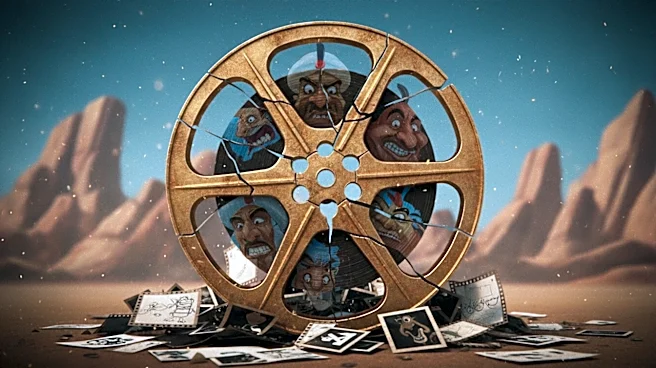
The most significant criticism came from Arab-American groups and other commentators who were appalled by the film's portrayal of Middle Eastern culture. The American-Arab Anti-Discrimination Committee (ADC) was a prominent voice of protest. The film’s opening song, “Arabian Nights,” originally featured the lyric, “Where they cut off your ear if they don’t like your face / It’s barbaric, but hey, it’s home.” The ADC and others argued that this lyric, and the term “barbaric,” reinforced harmful, violent stereotypes. The criticism was so effective that Disney agreed to change the lyric for the 1993 home video release, altering it to the less offensive, “Where it's flat and immense and the heat is intense.” The critique went beyond one song. Reviewers like Roger Ebert pointed out the troubling visual language: the heroes, Aladdin and Jasmine, were designed with Anglicized features and spoke with American accents, while the villains and background characters were depicted as grotesque caricatures with hooked noses, thick accents, and sinister appearances. This created a visual code where “good” Arabs looked and sounded more Western, while “bad” Arabs were exaggeratedly foreign.
Was Robin Williams’ Genie Too Much?
Robin Williams’ performance as the Genie is legendary, but at the time, it was also a point of contention. While most critics hailed it as a work of genius, some felt his barrage of anachronistic, pop-culture-heavy impersonations—from Ed Sullivan to Jack Nicholson—shattered the film's fairy-tale setting. The argument was that the Genie’s 20th-century references pulled the audience out of ancient Agrabah, making the film feel more like a showcase for Williams' stand-up routine than a cohesive story. This debate highlighted a larger question about the boundaries of animated storytelling. Was it a medium for timeless fables, or could it absorb the chaotic, self-referential energy of a modern comedy genius? While audiences overwhelmingly sided with Williams, the initial dissonance was a real sticking point for some critics who preferred the more earnest tone of predecessors like Beauty and the Beast.
A Dispute with its Biggest Star
Adding to the film's complicated debut was a very public falling out between Robin Williams and Disney. Williams had agreed to be paid union scale—just $75,000—for the role, a fraction of his usual fee. He did so on the condition that Disney not use his name or the Genie character excessively in marketing, as he didn't want his voice work to overshadow his other, more lucrative film projects being released at the time. However, when Aladdin became a box office juggernaut, Williams felt Disney violated this agreement by centering the Genie in its advertising campaigns. He publicly accused the studio of breaking their deal, leading to a feud that saw him refuse to return for the direct-to-video sequel, The Return of Jafar, where the Genie was voiced by Dan Castellaneta (the voice of Homer Simpson). The dispute was eventually resolved, and Williams returned for the second sequel, but the conflict added a sour note to the film's runaway success story.