





The Problem with Five-Star Ratings
Let’s be honest: buying gear online is a gamble. We lean heavily on user reviews and star ratings to guide us, but they have a fundamental flaw when it comes to technical apparel. Most reviews are written within a few weeks of purchase, when the jacket
is still crisp, new, and performing at its peak. They’ll tell you if the color is accurate and if the fit is right. They might even tell you if it survived a surprise 10-minute drizzle on the way to the car. What they can’t tell you is how that jacket will hold up after a year of being stuffed into a backpack, washed a dozen times, and worn through actual, persistent rain. The features that determine long-term durability and performance aren’t the flashy ones. They’re the quiet, boring, and utterly essential construction details that cheap brands skimp on and premium brands obsess over.
Meet the Unsung Hero: Seam Taping
So, what’s the one big thing everyone misses? It’s not the zipper brand or the number of pockets. It’s the seam taping. Every stitch in a jacket creates thousands of tiny holes, completely undermining any waterproof or windproof fabric. To solve this, manufacturers apply a special waterproof tape over these seams on the inside of the garment. This is a non-negotiable feature for any jacket claiming to be water-resistant. But here’s the secret: not all seam taping is created equal. This is where companies either invest in quality or cut a major corner that you won’t notice until it’s too late. A poorly taped seam is the first point of failure. When it starts to peel, crack, or delaminate, your “water-resistant” jacket becomes a very expensive sponge. Because it’s on the inside, and it’s not a sexy marketing feature, it’s rarely photographed for product pages or mentioned in reviews.
How to Be Your Own Quality Inspector
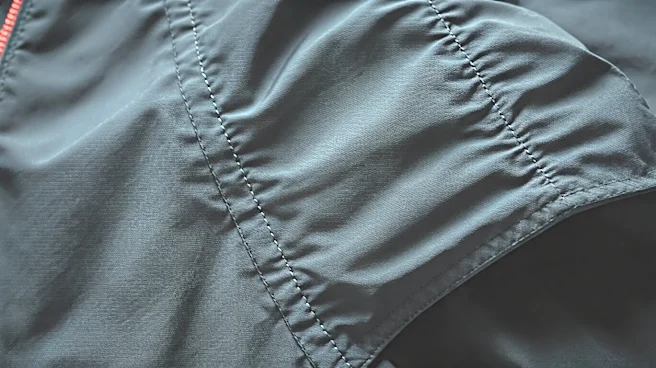
Next time you’re in a store or trying on a jacket you ordered online, ignore the tags for a minute and become your own quality inspector. Turn the windbreaker inside out and pay attention to the seams. First, is the tape even there? On a cheap “wind-resistant” shell, it might not be. On a proper jacket, you’ll see it. Now, look closer. High-quality taping should be narrow, precise, and perfectly flat. It should feel smooth and flexible, not stiff or crinkly. Run your fingernail along the edge; it shouldn’t even hint at peeling away. Pay special attention to complex intersections, like where the shoulder, sleeve, and body panels meet. This is where sloppy work gets exposed. You’re looking for clean, overlapping junctions, not a messy glob of tape. Bad taping looks wider, feels like cheap plastic, and you may even see bubbles or uneven adhesion. That’s a jacket destined to fail.
Other Telltale Signs of Craftsmanship
Once you’ve trained your eye to spot good seam taping, you’ll start noticing other subtle markers of quality that reviews ignore. Look at the top of the main zipper. Is there a small fabric flap, often lined with soft material, for the zipper pull to tuck into when it’s fully zipped? That’s a “zipper garage,” and it prevents the cold metal from chafing your chin. It’s a small, thoughtful detail that cheap jackets skip. Check the drawcords at the hem and hood. Are the plastic toggles flimsy and generic, or are they uniquely designed, easy to grip, and cleanly integrated? Finally, look for bartacks—a series of dense, reinforcing stitches—at high-stress points like the corners of pockets or the top and bottom of a zipper. These tiny details don't make for exciting review headlines, but they add up to a garment that lasts for seasons, not just a few wears.