



The Problem with Being Up Front
Getting close to the stage feels like the ultimate fan experience, but it’s often the worst place for audio quality. The massive speaker stacks hanging on either side of the stage—known as line arrays—are designed to project sound over enormous distances.
Up close, you’re not hearing the sound as a cohesive whole. Instead, you're likely getting blasted by one specific part of the array. High-frequency sounds (like cymbals and vocals) are highly directional, while low-frequency bass notes are less so. This means if you’re standing off to one side, you might get an overwhelming dose of treble from one speaker stack and a disconnected, rumbling bass from the subwoofers lined up on the ground. The result is often a loud but unbalanced mess where different frequencies feel like they’re fighting each other instead of working together.
The Secret Weapon: Delay Towers
Those seemingly random speaker towers dotting the middle of the field are the key to good festival sound. They’re called delay towers, and their job is to create a seamless audio experience for the entire audience. Sound travels at a finite speed, so for someone standing 100 yards from the stage, the audio arrives noticeably later than it does for someone in the front row. If the delay towers played the same audio at the same time as the main stage speakers, people in the back would hear a confusing echo—first the sound from the nearby tower, then the sound from the distant stage. To prevent this, audio engineers use precise calculations to delay the signal sent to these towers. The audio is timed to arrive at a listener's ears just a few milliseconds after the sound from the main stage, creating a single, unified wave of sound. This reinforces the audio, ensuring that vocals remain clear and instruments stay punchy, even three-quarters of a mile from the stage.
Fighting the Elements and the Crowd
Outdoor venues like Golden Gate Park present a host of challenges that indoor arenas don't. There are no walls or ceilings to naturally contain and reflect sound. Instead, engineers have to battle Mother Nature. Wind is a major culprit; it can literally blow high-frequency sounds away, making the music sound muffled or distorted. Temperature and humidity also play a huge role. Hot air rising from the ground during the day can bend sound waves upward, away from the crowd, while cooler evening air can help bend it back down. Even the audience itself is a factor. A huge crowd of people acts like a giant sound absorber, soaking up audio energy, which engineers have to account for. This is why sound quality can shift throughout the day, as weather changes and the field fills up.
Find the Sweet Spot: The Sound Booth
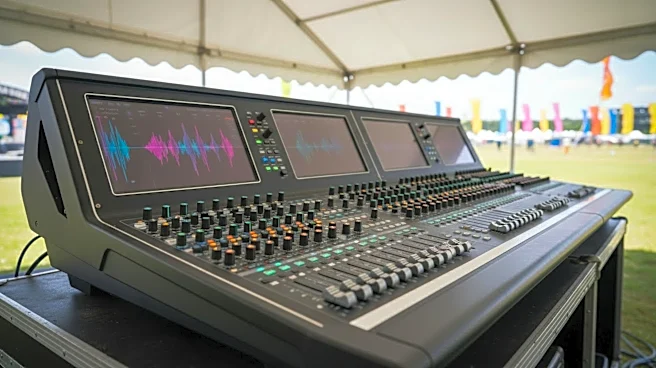
So where is the best place to stand? For the optimal listening experience, find the front-of-house (FOH) mixing booth—that tent in the middle of the field with all the lights and giant consoles. The FOH engineer is mixing the show from that exact position, meaning the entire sound system is calibrated to sound perfect right there. That spot is the sonic bullseye where the output from the main stage speakers and the delay towers converges perfectly. You are hearing exactly what the engineer wants you to hear: a balanced, powerful, and clear mix where every element of the music has its place. It might not have the front-row view, but it delivers the best possible sound the festival has to offer.