




Ancient Origins and Spiritual Protection
The story of eyeliner begins over 10,000 years ago in Mesopotamia and Ancient Egypt, where kohl was far more than a cosmetic. Made from ground minerals like galena, this dark powder was used by men and women across all social classes. Its purpose was twofold.
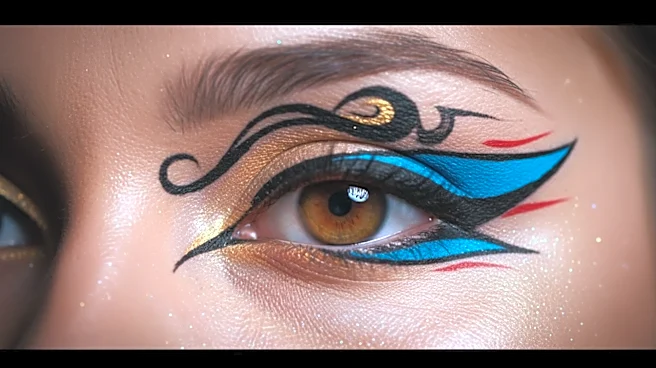
Practically, the heavy black lines helped reduce the harsh glare of the desert sun. Spiritually, Egyptians believed the kohl-rimmed eye, mimicking the divine eye of the god Horus, offered protection from the "evil eye" and illness. Makeup was so integral to life—and rebirth—that palettes and kohl jars were buried with the dead for use in the afterlife.
The Theatrical Expressions of Kabuki
In Japan, graphic lines found a powerful purpose on the Kabuki stage. This traditional form of theater uses a style of makeup called kumadori to instantly communicate a character's nature to the audience. The actors' faces become canvases, with exaggerated lines and bold colors telling a story before a single word is spoken. Red lines signify a virtuous and powerful hero, while blue or indigo can represent a villain or jealous spirit. Each of the nearly 100 variations of kumadori is a specific visual language, transforming the actor and making their emotions legible even from the back of the theater.
20th-Century Rebellion: Flappers and Mods
The 20th century saw eyeliner become a tool of social rebellion. In the 1920s, as women gained new freedoms, the Victorian era's subtle look was rejected for the dramatic, kohl-rimmed smoky eye of the flapper. Inspired by silent film stars, this dark, smudgy look was a bold act of defiance. Decades later, in the 1960s, a different kind of graphic eye emerged with the Mod movement. Supermodel Twiggy became the face of this era, popularizing a signature look that included a sharp, dark line drawn in the crease of the eyelid, often paired with pale shadow and dramatic, painted-on lower lashes. This wasn't about looking natural; it was about transforming the eye into a piece of graphic art.
Subcultures, Sound, and Identity
By the late 1970s and into the 1980s, eyeliner became the unofficial uniform for punk and goth subcultures. Emerging from the post-punk music scene, bands like Siouxsie and the Banshees and The Cure used heavy, dark, and often messy eyeliner to create an aesthetic of moody rebellion. For these movements, makeup wasn't about conventional beauty. It was an anti-establishment statement. The look, characterized by starkly pale skin and heavy black liner, was a visual rejection of the mainstream and a way to signal belonging to a tribe that celebrated the macabre and the marginalized.
From Comic Panels to Cheekbones
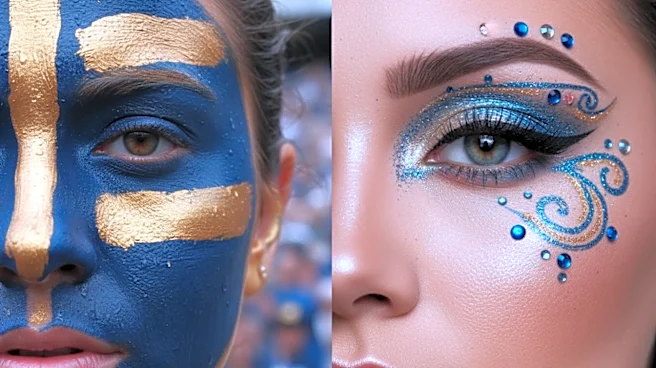
The influence of pop art and comic books brought a new, more playful dimension to graphic makeup. Inspired by the work of artists like Roy Lichtenstein, who mimicked the Ben-Day dots and bold outlines of printed comics, makeup artists began translating this aesthetic onto the face. This style uses strong black lines to define features, vibrant primary colors for eyeshadow and lips, and dotted patterns to create a two-dimensional, animated effect. What started as a niche or Halloween look has since seeped into mainstream beauty, encouraging people to treat their faces like a literal canvas for bold, illustrative art.
The Digital Age and Expressive Freedom
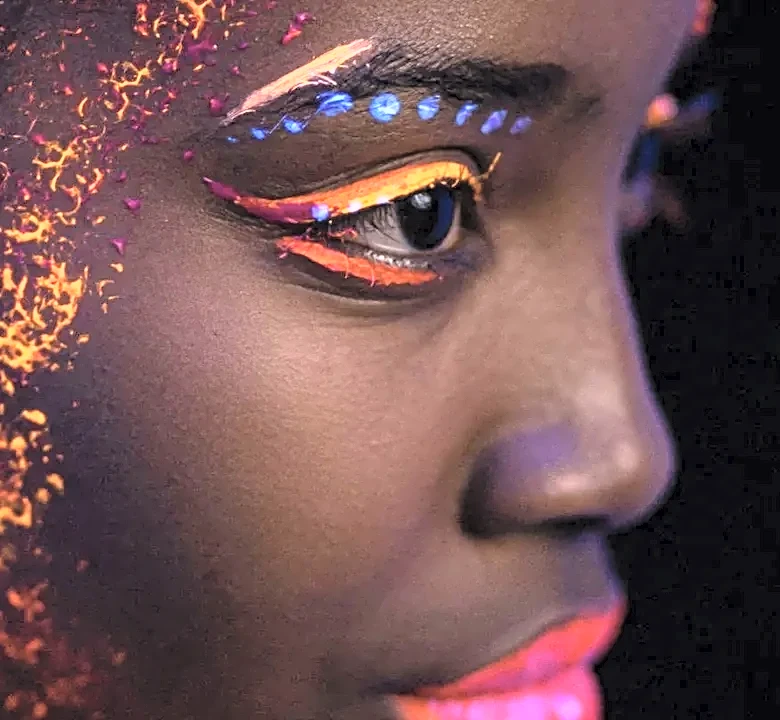
Today, all these historical threads have converged in the digital age. Shows like HBO's Euphoria have been hugely influential, showcasing makeup as a critical tool for storytelling and emotional expression. The show's makeup artist, Doniella Davy, used glitter tears, sharp neon lines, and strategically placed rhinestones to reflect the characters' inner worlds. Fueled by social media platforms like TikTok and Instagram, these experimental looks went mainstream, moving beyond a minimal aesthetic to embrace fearless color, sparkle, and abstract shapes. The modern graphic eye is a culmination of everything that came before: a tool for protection, performance, rebellion, and pure artistic joy.