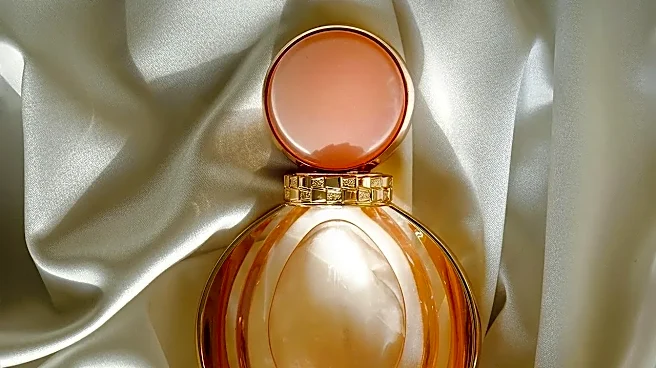








The Scent You Can't Quite Place
You’ve smelled it before, even if you didn’t know it. It’s the X-factor in fragrances like Terre d’Hermès, the minimalist core of Escentric Molecules’ Molecule 01, and a structural backbone in countless others, from Dior Sauvage to Chanel Chance. It’s a scent that
seems to hover just above the skin, creating a radiant, magnetic aura that’s hard to pin down. It’s warm, clean, and woody, but in an abstract, almost transparent way. This elusive quality is no accident; it’s the signature of a single, game-changing ingredient that has become a cornerstone of contemporary perfumery. For years, it was an industry secret, the perfumer's trick for adding a modern, velvety touch that makes a scent feel both personal and impossibly chic.
Meet Iso E Super
The hidden note is called Iso E Super. Created in a lab by International Flavors & Fragrances (IFF) in the 1970s, it's a synthetic aroma-molecule that doesn't smell like anything in nature. Forget rose petals or sandalwood chips; Iso E Super is pure invention. Its scent profile is famously difficult to describe: it's a smooth, dry, woody-amber character with a cedar-like nuance. Yet for some people, it's almost odorless on its own. Its magic lies in its interaction with other notes and, most importantly, with the wearer's skin chemistry. It's what perfumers call a 'skin scent,' meaning it melds with your natural aroma to create something entirely unique to you—a 'your skin but better' effect.
The Ghost in the Perfume Bottle
So why is it a 'hidden' note? First, some people experience partial anosmia (the inability to smell an odor) to it, meaning they can't detect it while others around them can. Perfumer Geza Schoen, who built his brand Escentric Molecules around the ingredient, notes that it seems to vanish and reappear to the wearer as their olfactory receptors become blocked and then clear. Secondly, it’s rarely the star of the show, at least not by name. Perfumers use it as a base note or an enhancer, often in significant quantities—up to 25% in Dior’s Fahrenheit or 55% in Terre d'Hermès—to give a fragrance radiance, longevity, and a smooth, velvety texture. It’s the ultimate supporting actor, making everything else in the composition shine brighter without stealing the spotlight. It's often referred to as the 'MSG of fragrance' for its ability to amplify and enrich other notes.
From Radical Idea to Modern Staple
While it was used subtly for decades, Iso E Super exploded into the consciousness of fragrance lovers in 2006 with the launch of Escentric Molecules. Geza Schoen released two fragrances: Escentric 01, which featured a high concentration (65%) of Iso E Super, and Molecule 01, which was shockingly composed of nothing but Iso E Super diluted in alcohol. The idea that a single synthetic molecule could be a complete fragrance was revolutionary. He expected it to appeal only to a niche group of artists and outsiders but instead, it became a global phenomenon. This daring move proved that a scent didn’t need a complex pyramid of top, middle, and base notes to be compelling. It just needed a great story and an irresistible, minimalist character.
Why It Defines Our Scented Moment
Iso E Super's dominance reflects a broader cultural shift toward minimalism, subtlety, and personalization. In an era where loud, overpowering fragrances can feel dated, the intimate, clean aura of Iso E Super feels perfectly modern. It doesn't shout; it whispers. It’s not a costume you put on, but an enhancement of who you already are. This synthetic molecule offers a type of abstract elegance—a scent that feels like clean air, warm skin, or a perfectly tailored piece of clothing. It’s the olfactory equivalent of quiet luxury, a secret shared between the wearer and those who get close enough to notice.