

The King of the Skyline
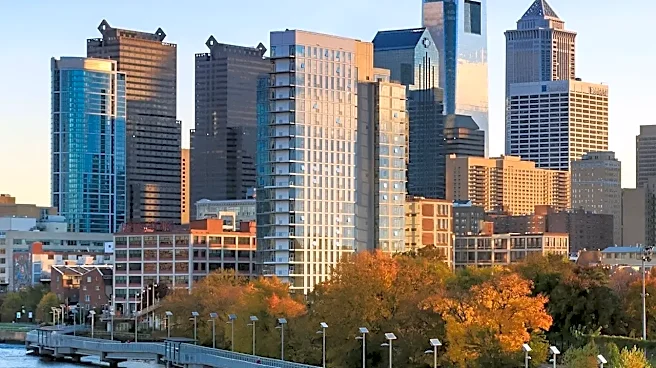
For nearly a century, the Philadelphia skyline was a simple affair. At its heart stood City Hall, a magnificent and sprawling masonry building completed in 1901. Crowning its iconic clock tower, 548 feet above the streets, is a 37-foot bronze statue of
the city’s founder, William Penn. Designed by Alexander Milne Calder, this statue wasn’t just an ornament; it was a symbol. For decades, Penn’s hat was the highest point in the city, a visual anchor for residents and a tangible connection to the city's origins. From every corner of the city, you could see Penn watching over his “Greene Countrie Towne.” This dominance wasn't just a coincidence; it was a matter of principle.
An Unwritten Rule
There was no official law, but there was an understanding, a so-called “gentlemen’s agreement” among developers: no one would build higher than the brim of Billy Penn’s hat. This informal pact was championed for years by legendary city planner Edmund Bacon. When audacious developers would propose a tower that dared to scrape the sky higher than Penn, Bacon would reportedly ask, “It’s only a gentlemen’s agreement. The question is, are you a gentleman?” For most of the 20th century, the answer was yes. The agreement preserved the visual primacy of City Hall and, by extension, the legacy of the city's founder. It was a point of quiet pride, a belief that Philadelphia was different from other metropolises that let commerce dictate their skylines. But in the 1980s, that was about to change.
The Curse of Billy Penn
In 1987, developer Willard Rouse III broke the pact. His gleaming skyscraper, One Liberty Place, soared to 945 feet, casting a literal and figurative shadow over William Penn. Almost immediately, something strange began to happen. Philadelphia’s beloved professional sports teams—the Phillies, Eagles, 76ers, and Flyers—all entered a championship drought. They would get close, tantalizingly so, only to suffer gut-wrenching losses in the finals. A superstition was born: the “Curse of Billy Penn.” The logic was simple and satisfyingly mystical: by disrespecting the city’s founder, Philadelphia had doomed its teams. The curse became a part of the city's identity, an explanation for two decades of sporting heartbreak that followed the skyline's transformation.
Breaking the Spell
By the mid-2000s, the curse was a well-established piece of local folklore. As a new skyscraper, the Comcast Center, was being built to become the city's new tallest, an idea formed. To appease the spirit of William Penn—and perhaps the city's long-suffering sports fans—a clever solution was hatched. In June 2007, as the final beam of the Comcast Center was hoisted into place, ironworkers affixed a tiny, four-inch figurine of William Penn to its highest point. With this small gesture, Penn was symbolically, if not literally, the highest man in Philadelphia once again. The question on everyone's mind was: would it be enough to break the curse?
A City's Superstition and a Sweet Victory
The answer came just over a year later. In October 2008, the Philadelphia Phillies, who hadn't won a championship since 1980, stormed through the playoffs and defeated the Tampa Bay Rays to win the World Series. The city erupted. The 25-year championship drought was over, and the curse was officially broken. Coincidence? Maybe. But for millions of Philadelphians, the connection was clear. The victory cemented the legend of Billy Penn's curse and its clever resolution into the city's lore. Ever since, workers have continued the tradition, placing a small Penn statuette atop each new tallest building, including the Comcast Technology Center in 2017, just before the Eagles won their first Super Bowl.