




Beyond the Price Tag: What Is an 'Investment Piece'?
Before we talk about styling, let’s clear up what makes a necklace an “investment.” It’s not just about a high price. An investment piece is defined by its enduring quality and timelessness. Think solid 14k or 18k gold, platinum, real diamonds, and quality gemstones—materials
that last for generations. Unlike trendy costume jewelry that may tarnish or break after a few wears, these pieces are crafted to withstand daily life and hold their value. The design is just as important. Investment pieces typically feature classic silhouettes—a simple gold chain, a solitaire diamond pendant, a timeless tennis necklace—that won't look dated in a few years. The idea is to acquire something that can be worn for decades, not just a single season, and potentially become a future heirloom.
The Smart Math of Cost-Per-Wear
Here's the core reason layering matters more with expensive jewelry: it dramatically lowers the cost-per-wear. The cost-per-wear (CPW) is a simple formula: divide the item's total cost by the number of times you wear it. A $50 fast-fashion necklace you wear five times costs you $10 each time. But a $1,000 classic gold chain that you can layer into dozens of different combinations and wear hundreds of times might only cost a few dollars per wear over its lifetime. Layering is the key to unlocking this value. A single investment necklace worn alone is just one look. But when layered with two or three other pieces, it becomes part of a versatile style system. The ability to mix and match creates exponential possibilities, ensuring your most valuable pieces get the regular wear they deserve instead of sitting in a jewelry box for special occasions.
From a Single Chain to a Signature Story
Beyond the practical math, layering transforms your jewelry from a collection of individual items into a personal narrative. Each necklace in a stack can represent something different: a chain inherited from your mother, a pendant bought on a memorable trip, a modern piece you purchased to celebrate a milestone. When worn together, they create a unique composition that is entirely your own. This level of personalization is harder to achieve with mass-produced, temporary jewelry. Fine jewelry carries weight, both literally and emotionally. By curating your own stack, you’re creating a signature look that communicates your history and style without saying a word. It’s an evolving art form that grows with you, allowing you to add new pieces and create different combinations depending on your mood or the occasion.
The Practical Rules of a Perfect Stack
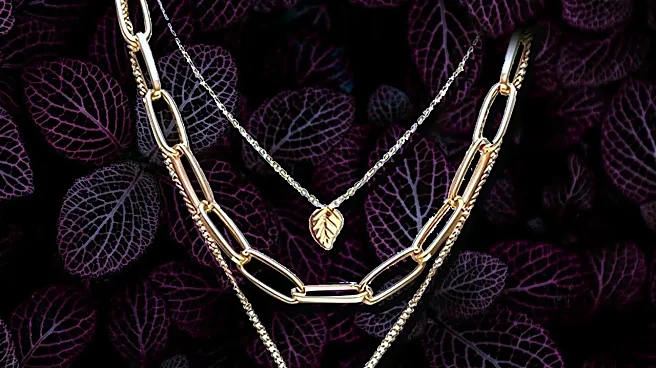
Creating a balanced, tangle-free stack comes down to a few key principles. First, vary your lengths significantly. A good rule of thumb is to maintain at least a two-inch gap between each chain—for example, a 16-inch, 18-inch, and 20-inch combination. This gives each piece its own space. Second, mix up textures and weights. A delicate, fine chain is less likely to tangle with a chunkier box chain or a smooth snake chain. The contrast not only prevents knotting but also adds visual interest. Finally, add a focal point. A necklace with a pendant or charm adds a bit of weight that helps anchor the piece and keep it from riding up and tangling with the others. Many stylists recommend starting with three necklaces and building from there.
Protecting Your Assets While You Wear Them
When you're layering valuable items, proper care is non-negotiable. While these pieces are durable, they aren't indestructible. Constant friction between chains can cause minor scratches over time, especially if you’re mixing harder materials. Be mindful of softer gems like opals or pearls, which can be scratched by diamonds or the sharp edges of a metal chain. To prevent excessive tangling that can stress the chains, consider a multi-strand layering clasp. This small device has multiple rings to attach each necklace, keeping them perfectly spaced and parallel at the back of your neck. Finally, always store your necklaces separately. Hanging them on a jewelry stand or placing them in individual compartments of a jewelry box is the best way to prevent them from becoming a tangled mess between wears.