
Born from a Specific Need
You can’t understand Tribeca’s programming philosophy without remembering its origin story. Founded by Jane Rosenthal, Robert De Niro, and Craig Hatkoff in 2002, the festival was a direct response to the September
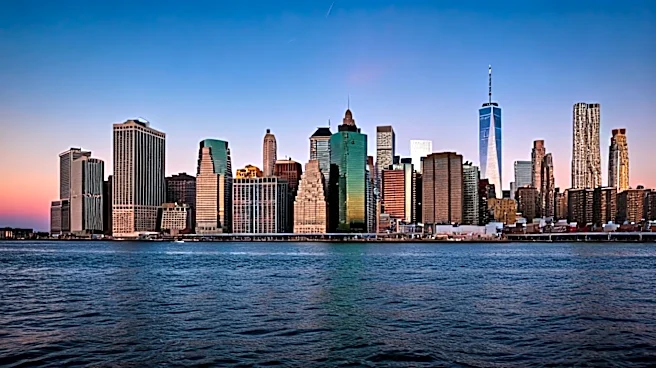
11th attacks. Its initial goal was not to discover the next global blockbuster, but to revitalize a specific place: Lower Manhattan. It was an act of civic and cultural first aid for a wounded neighborhood. This DNA—this focus on the local, the immediate, and the deeply personal—has never left. While other major festivals like Cannes or Venice trade in grand cinematic statements and red-carpet glamour, Tribeca has always felt more grounded, more connected to the city streets it calls home. Its mission began with specificity, and that focus has become its greatest curatorial strength.
The Death of the Monoculture
For decades, the holy grail for any storyteller was 'universality'—a theme so broad it could theoretically appeal to everyone, everywhere. But in the 21st century, that ideal has fractured. We no longer live in a monoculture where everyone watches the same three TV networks. We live in the age of the algorithm, a world of streaming services and social media feeds that cater to hyper-specific tastes. There isn't one audience; there are millions of overlapping niche audiences. Tribeca’s embrace of specificity feels like a direct and intelligent response to this reality. By expanding its slate to include television premieres, podcast showcases, video games, and immersive VR/AR experiences, the festival acknowledges that powerful stories aren't confined to a 90-minute film. A narrative-driven video game or a serialized podcast can explore a character or community with a depth that a single film often cannot, and Tribeca is one of the few legacy festivals that gives these forms equal footing.
Finding the Universal in the Particular
The great irony is that the most specific stories are often the most resonant. A story trying to be 'for everyone' often ends up feeling like it’s for no one, its edges sanded down to a bland, generic paste. True universality isn't found in vague platitudes about love or loss; it’s found in the undeniable emotional truth of a highly specific situation. Look at the films Tribeca elevates. They are often deeply embedded in a culture, a neighborhood, or a subculture that might seem alien to an outsider. Whether it's a documentary about a niche competitive sport or a narrative feature set in a community rarely seen on screen, the festival bets that audiences are smart enough to connect with the humanity at the core. A film about a mother's fears in a specific Mexican folk-horror context, like 2022’s *Huesera: The Bone Woman*, touches on a more primal, universal fear of motherhood than a generic drama ever could. By refusing to ask filmmakers to translate their experience for a general audience, Tribeca empowers them to be more authentic, and in turn, more powerful.
A Platform for Unfiltered Voices
Ultimately, rewarding specificity is about more than just a curatorial preference; it's an act of inclusion. For decades, filmmakers from marginalized communities were often told their stories were 'too niche' for the mainstream. They were encouraged to make their work more 'universal'—a coded request to make it more palatable to a default white, Western audience. By championing specificity, Tribeca creates a vital platform for voices that might otherwise be silenced or diluted. It sends a message to creators: your specific experience is valuable. Your community's story matters, not as an exotic detour, but as a central part of the human narrative. This makes the festival not just a marketplace for films, but a crucial engine for a more diverse and interesting creative ecosystem. It’s where a filmmaker can be rewarded for telling *their* story, not a story they think everyone wants to hear.