





The Search for Ghouls and Ghosts
It all begins with the casting call, but not the kind you’re thinking of. Productions rely on specialized casting agencies that focus exclusively on background talent, sometimes called extras. These agencies maintain databases of thousands of people,
cataloged by look, age, and special skills. For a Halloween episode, the needs are specific. A casting director might put out a call for “college-aged partiers” or “suburban parents in goofy costumes.” Some productions with bigger budgets might hire a dedicated crowd assistant director to coordinate the logistics of a large group of extras. The goal is to find reliable people who can take direction and have the patience for a long day of work that is often more waiting than acting.
Welcome to the Holding Area
On the day of the shoot, hundreds of extras arrive, often before sunrise. They aren’t sent directly to the set but to a large designated space known as “extras holding.” This area—often a nearby soundstage, church basement, or large tent—becomes the nerve center for the day. Here, extras check in, fill out paperwork, and are sorted into groups. This is where the marathon of waiting begins. It’s a highly organized system designed to keep a large number of people comfortable and ready to go at a moment's notice, with production assistants (PAs) and assistant directors (ADs) managing the flow.
The Organized Chaos of Costuming
Costuming a crowd of zombies, superheroes, and pop-culture parodies is a monumental task. Sometimes, extras are asked to bring their own Halloween costumes, often with specific guidelines to avoid logos or all-white outfits that flare on camera. On larger productions, a dedicated wardrobe department will have racks of costumes ready. Extras are sent through an assembly line of fittings, with wardrobe assistants making sure no two people in the same shot are wearing the same pirate costume. After wardrobe, they move to hair and makeup for final touches before being lined up for inspection by an assistant director.
Action! (But Silently)
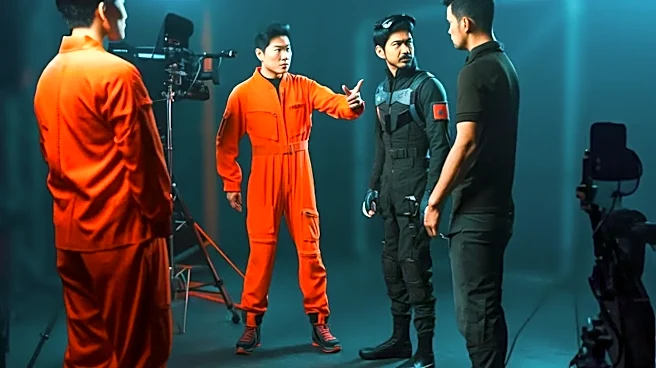
Once on set, the background actors are the responsibility of the assistant directors, who act as the on-set generals. The director is focused on the main actors, so the 1st or 2nd AD places the extras and gives them their actions. The instructions are often simple: “Walk from this table to the bar,” or “Have a conversation with this person.” The key rule? No talking. Background actors must pantomime their conversations to avoid interfering with the main actors' dialogue. It’s a silent ballet, carefully choreographed to create the illusion of a lively, noisy party.
The Headache of Continuity
One of the biggest challenges with large crowd scenes is continuity—making sure everything stays consistent between takes. If a background actor is holding a red cup in their left hand in the master shot, they must be doing the same in every subsequent take and camera angle, which might be filmed hours apart. A script supervisor or a dedicated PA will often take photos to track these details. An extra who forgets where they were standing or what they were doing can inadvertently create a noticeable error in the final cut, forcing a costly reset of the scene. This is why reliability and the ability to repeat an action precisely, over and over again, are prized skills for a background actor.