




Watch the Shape, Not Just the Ball
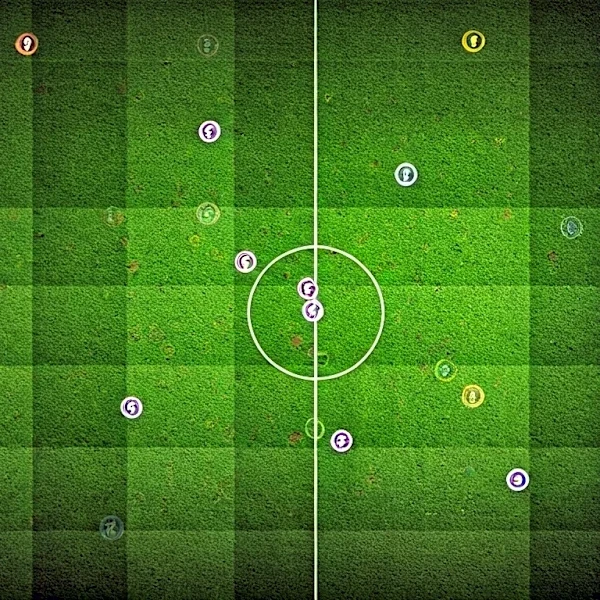
The first rule of watching soccer like a pro is to zoom out. Instead of just following the ball, watch how a team moves as a unit. Do they stay compact, like a fist, or are they spread out? Formations like a 4-4-2 or 4-3-3 aren't just numbers; they dictate
a team's entire philosophy. A 4-3-3, with three forwards, is designed for aggressive, attacking play. A team with five defenders, like in a 5-3-2, is built to absorb pressure and be difficult to break down. When a team has the ball, notice how their shape expands to create space. When they lose it, see how quickly they contract to deny the opponent that same space. This collective ebb and flow is the foundation of every tactical plan.
The Art of the 'Press'
You'll hear commentators talk constantly about “the press.” It’s not just about chasing the opponent. A good press is a coordinated hunt designed to force a turnover in a dangerous area. Instead of the whole team running wildly, one player initiates the press—often triggered by a bad touch or a pass to the sideline—and their teammates move in unison to close off all the easy passing options. It’s a high-risk, high-reward strategy. A successful press can lead to a scoring chance against a disorganized defense. But if a team breaks through the press, they suddenly have acres of open space to attack. The recent World Cup has shown how teams that press all-out, like the USA and Canada, can be vulnerable against technically superior opponents who can calmly pass their way out of trouble.
The Counter-Attack: Weaponizing Speed
There is nothing in soccer quite as thrilling as a lightning-fast counter-attack. The entire strategy is built on a simple idea: a team is most vulnerable the moment they lose the ball while attacking. A counter-attacking team will often intentionally invite pressure, defending deep in their own half. They absorb the attack, win the ball back, and then explode forward with speed, aiming to get the ball to their fastest players before the other team has time to reset its defense. An effective counter-attack isn't a fluke; it's a rehearsed, deliberate strategy that requires a quick transition from defense to offense and decisive, forward passes into the space the opponent has vacated.
Finding Pockets of Space
The best attacking players in the world have an almost supernatural ability to find open space. They often drift into the areas between the opponent's defensive and midfield lines. This is the most dangerous zone on the pitch. Receiving the ball here allows an attacker to turn and run at the defense, pass to a teammate, or shoot. Defenses are designed to stay compact and eliminate these pockets, so attackers must be clever and constantly moving to find them. The next time you watch a game, keep an eye on a team's best playmaker when they don't have the ball. You'll see them constantly scanning, pointing, and subtly shifting their position to become an option in one of these critical gaps.
The Unsung Heroes and Hybrid Roles
The numbers in a formation don't tell the whole story. Modern soccer is defined by players who blur the lines between traditional positions. A fullback might spend half the game acting as a winger, overlapping on the attack to provide crosses. A defensive midfielder, often the least flashy player, might be the team's most important, dictating the tempo of the entire game with their passing and positioning. Some teams even use a "false nine," where the main striker drops deep into the midfield, confusing defenders who don't know whether to follow him or hold their position. Understanding these hybrid roles reveals the true sophistication of a coach’s plan and helps you appreciate the players whose contributions don't always show up on the scoresheet.