


The Dream: A Living Horror Movie
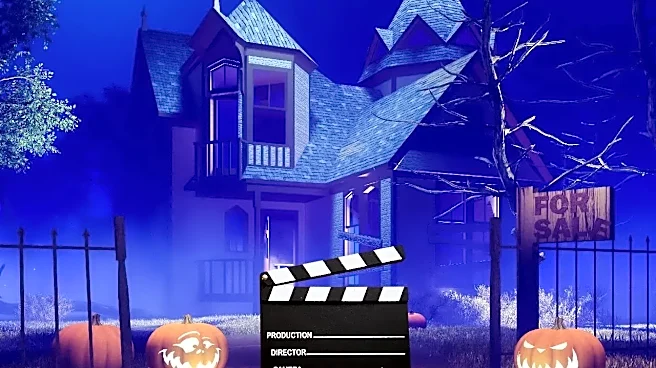
Every haunted house at Universal’s Halloween Horror Nights begins as a breathtakingly ambitious dream. The creative teams, led by figures like John Murdy in Hollywood, live and breathe horror. Their goal isn’t just to make you jump; it’s to plunge you into
a living nightmare. They obsess over details that most guests, moving at a brisk walking pace, will never consciously notice—the specific type of grime on a wall, the historically accurate scent pumped into a room, the subtle audio cue that builds dread seconds before a scare. This process is a year-round, 15-month-plus endeavor involving hundreds of people, from scenic designers who draw every single wall to audio engineers and lighting experts. They aim for total immersion, a world so convincing you forget you’re in a theme park. The passion is immense, rooted in a deep love for the genre and a desire to tell a complete, terrifying story from the first step inside to the last.
The Reality: The Brutal Math of Crowds
Then comes the operational monster: throughput. Halloween Horror Nights is an astonishingly popular event, attracting tens of thousands of fans every single night. Universal has a duty to provide value to every paying guest, and that means getting them through the star attractions. A house that can only process a few hundred people per hour would result in astronomical wait times and a logistical catastrophe. Designers must therefore build for maximum capacity. This introduces a series of brutal, art-killing compromises. A scare actor can’t perform a five-second mini-scene for every individual; they must have a reset time of just a few seconds to hit the next person in line. Complex effects that might cause guests to pause and create a bottleneck are often vetoed. The very layout of the mazes—often long, winding corridors—is dictated as much by the need to hold a queue as it is by storytelling.
The Unhappy Compromise in Action
This is where the conga line is born. To keep lines moving, operators must “pulse” guests through in a near-constant stream. This inevitably dilutes the artistic vision. The carefully crafted atmosphere is broken by the sight of the person in front of you getting scared a second before you do. Designers try to mitigate this. They design scares that hit the whole group, aiming for the middle and back of the line, not just the front. They use darkness and tight corridors to shorten sightlines, so you can’t see the scare coming from 20 feet away. But ultimately, a sacrifice must be made. Scares are engineered to force guests forward, almost chasing them through the attraction to maintain pace. Every house is a masterclass in compromise, a tightrope walk between the artists who want you to linger in their terrifying world and the operators who need you to keep moving.
Can Anyone Ever Win?
For years, fans have lamented this trade-off, wishing for a more intimate, theatrical experience. Universal has shown signs of listening, experimenting with limited-capacity premium nights that promise shorter waits and a better experience. But for the main event, the fundamental conflict remains. The massive popularity of HHN is precisely what funds its incredible artistic ambition. The budget for those stunningly detailed sets and intellectual property rights comes from selling a high volume of tickets. Without the throughput, the art would suffer. And without the art, the crowds wouldn't come. The conga line isn't a sign of failure; it's a symptom of wild success. It’s the unavoidable friction generated when a boutique, theatrical horror experience scales up to become a blockbuster entertainment event.