






The Odd-Man Rush vs. The Counter-Attack
In hockey, nothing gets you out of your seat faster than an odd-man rush. A turnover at the blue line, and suddenly your team is screaming down the ice, 3-on-2 or, even better, a 2-on-1. It’s a moment of pure chaos and opportunity. The defense is scrambling,
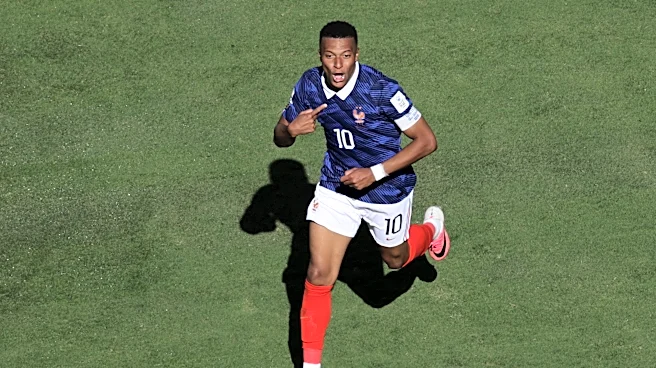
the goalie is trying to read the pass, and the shooter is looking for that perfect lane. Soccer’s equivalent is the counter-attack. It starts the same way: a defensive stop, a stolen pass in the midfield. Suddenly, a team that was just absorbing pressure explodes forward. Instead of three players on skates, it’s three or four runners hitting open grass. The through-ball from a midfielder is the equivalent of the perfect stretch pass from a defenseman. It’s designed to bypass the opposition and send a player like Kylian Mbappé or Mohamed Salah in on goal. The feeling for a fan is identical: a sudden surge of hope, the defense backpedaling in panic, and the potential for a game-changing goal in a matter of seconds.
The Power Play vs. Sustained Pressure
Think about a hockey power play. The attacking team has a numbers advantage, allowing them to control the offensive zone. They cycle the puck along the boards and up to the point, patiently waiting for a seam to open up for a one-timer or a backdoor tap-in. The penalty killers are forced into a tight box, blocking shots and desperately trying to clear the puck. In soccer, you’ll see this same dynamic when a dominant team pins its opponent in their own defensive third. There’s no man advantage, but there’s a massive territorial one. The attacking team will string together 20, 30, even 40 passes, moving the ball from one side of the field to the other, probing for weakness. The defenders are forced into a compact, low block—soccer’s version of the penalty-kill box. They aren’t trying to win the ball back so much as clog passing lanes and block shots. The tension builds in exactly the same way, as fans wait for that one brilliant pass or shot that breaks the defensive shell.
The Goalie’s Art: Angles vs. Acrobatics
A hockey goaltender’s game is a science of angles and positioning. They play at the top of the crease to cut down the angle, making the 6x4 net seem tiny. Their saves are often technical, built on a foundation of butterfly slides and blocker positioning. The spectacular glove save is the highlight, but most of their work is quiet, efficient, and positional. A soccer goalkeeper is a different beast, guarding a massive 24x8 foot net. They can’t just cut down the angle; they have to cover immense space. This makes their job more about explosive athleticism and pure reaction time. A save that a hockey goalie makes with a simple pad slide becomes a full-stretch diving save for a soccer keeper. While a hockey goalie is trying to make themselves big, a soccer keeper is often a coiled spring, ready to explode sideways or charge off their line to smother a breakaway. The core job is the same—be the last line of defense—but the physical expression is pure acrobatics versus calculated geometry.
The Playmaker: Quarterback D-man vs. Midfield General
Every great hockey breakout starts with a defenseman who can see the whole ice. Think of a player like Cale Makar or Adam Fox. They retrieve the puck behind their own net, and instead of just chipping it off the glass, they scan the ice and fire a perfect tape-to-tape pass that springs the forwards through the neutral zone. They are the engine of the transition game. In soccer, this role belongs to the deep-lying midfielder, or the "number 6." This player is the pivot between the defense and the attack. They sit in front of the back line, break up opposition plays, and then, with one perfectly weighted long ball, they can launch a counter-attack. A player like Manchester City's Rodri or Real Madrid legend Toni Kroos functions as the team’s quarterback. They may not get the glory of scoring, but they dictate the pace and direction of the game, turning defense into offense with a single, brilliant decision. Their vision is the spark that ignites the entire attack.