





The Challenge: A High-Speed Puzzle
The core challenge of the iHeartRadio Music Festival is presenting a dozen or more A-list artists, each with their own distinct brand and technical requirements, on the same stage over two nights. In a typical concert, a headliner has hours to load in and soundcheck.
Here, artists get mere minutes between sets. This puzzle is made even more complex because the event is not just a concert; it's a major television and streaming production. Every look must be perfect for the thousands in the T-Mobile Arena and for the millions watching at home. This requires a solution that is both incredibly fast and visually versatile, capable of satisfying a rock band, a rapper, and a pop singer in quick succession.
The Mechanical Marvel: A Revolving Stage
The festival's primary weapon against the clock is a feat of engineering: a massive rotating stage. This turntable design is the secret to the lightning-fast transitions that seem almost impossible to the naked eye. While one artist is performing for the live audience on the front-facing half of the stage, a small army of technicians is hard at work on the back half, completely hidden from view. They are busy assembling the next performer’s entire set—from drum risers and keyboards to custom props. When one performance ends, the stage machinery whirs to life, rotating 180 degrees. The old set disappears backstage to be dismantled, while the new, fully prepared set seamlessly slides into place, ready for the next artist to begin.
The Digital Canvas: Light and Video
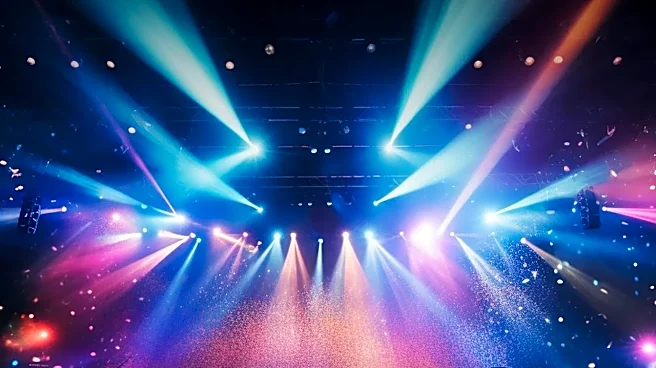
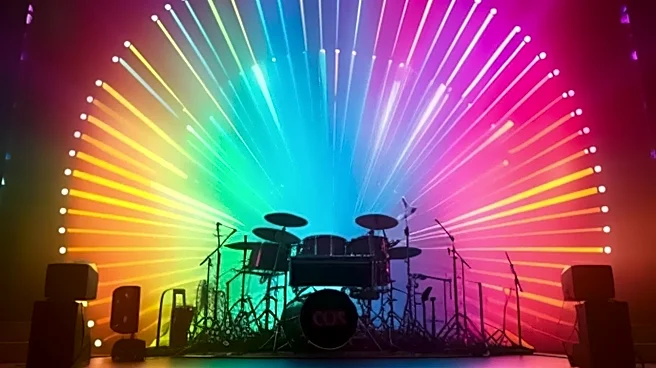
While the rotating stage handles the physical equipment, the dramatic aesthetic shifts come from a massive, flexible digital canvas. The festival’s production relies on an enormous array of LED video walls and a sophisticated lighting rig comprised of hundreds of high-powered fixtures. This setup allows the production team, led by veteran designers like Tom Kenny, to completely repaint the environment for each artist. By working closely with each performer's creative team, they develop custom video content and lighting schemes. One minute, the stage is bathed in the warm, golden hues for a country star; the next, it’s a pulsing, geometric world of strobes and lasers for an EDM act. This approach ensures that even though the physical architecture of the stage is consistent, the visual experience is unique to each performance.
The Human Element: A Backstage Ballet
Technology alone doesn't run the show. The entire operation is a masterclass in human coordination, a precisely choreographed ballet performed by hundreds of unseen professionals. An extensive team of architects, producers, engineers, riggers, and stagehands works for days to assemble the initial structure. During the show, stage managers are in constant communication, directing the flow of traffic as crews move enormous set pieces on and off the turntable. It is a high-stakes environment where there are no second takes. This seamless execution is the product of months of planning and the expertise of specialized production companies that bring all the complex pieces—from artist contracts and technical riders to the final load-out—together into one cohesive event.