


The $300,000 Gamble
In 1978, the film industry was dominated by studio blockbusters. For an independent production like 'Halloween', getting noticed was nearly impossible. Producers Irwin Yablans and Moustapha Akkad had a taut, terrifying film from a young director named
John Carpenter, but they had a modest budget of around $300,000 and no studio backing. Yablans, a savvy distributor, initially pitched an idea about a killer stalking babysitters, which Carpenter and his co-writer Debra Hill then crafted into the film we know today. But with the movie complete, the real challenge began. The major studios weren't interested, believing horror films didn't make significant money. This rejection forced Yablans to distribute the film himself through his company, Compass International Pictures, requiring a clever plan to outmaneuver the big players.
A Slow Burn in Middle America
Instead of a wide, splashy release that would have been financially ruinous, Yablans opted for a methodical 'platform release'. The strategy was to open the film in a limited market, build word-of-mouth, and then slowly expand across the country. He chose Kansas City, Missouri, as the launchpad on October 25, 1978. The thinking was that the film's middle-American setting would resonate with local audiences. If it failed, they could quietly bury it and try another city without a major loss. The first weekend's sales were underwhelming. But then something incredible happened. Ticket sales doubled the next weekend, then tripled, then grew tenfold as audiences, electrified by what they saw, became the film's marketing engine. This slow burn created a mystique and a demand that a conventional release never could have achieved.
The Perfect Venue for Fear
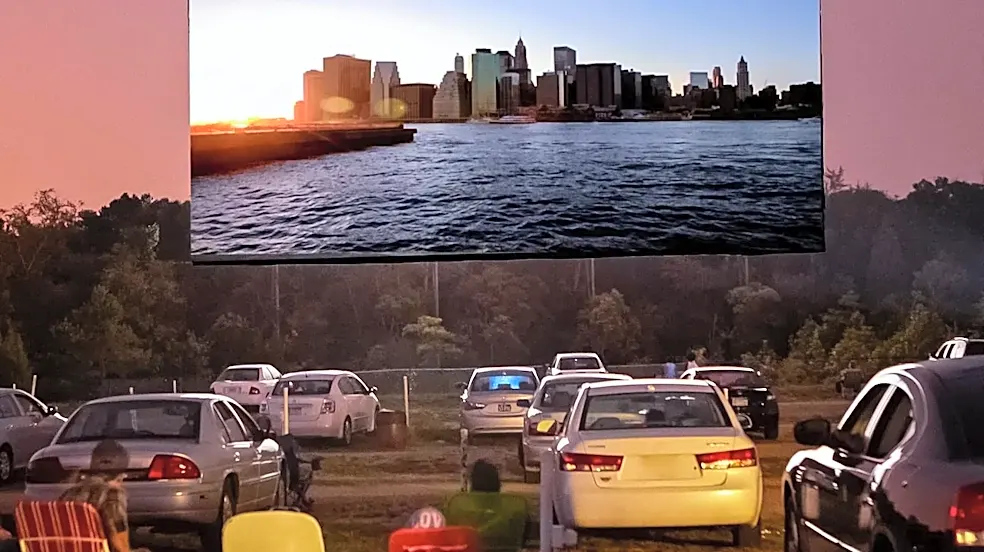
A crucial component of this slow-roll strategy was the choice of venue: the drive-in movie theater. By the late 1970s, drive-ins were considered a somewhat fading part of Americana, often relegated to showing B-movies. But for 'Halloween', they were the perfect breeding ground for terror. Drive-ins offered a low-cost way to get the film on screens and catered directly to the movie's target demographic: teenagers and young adults looking for a thrill. The isolated, dark environment of a car, surrounded by shadows, amplified the film's suspense exponentially. John Carpenter's masterful use of the widescreen frame, filling every corner with potential threats, was tailor-made for the expansive drive-in screen. The experience wasn't just watching a movie; it was feeling like you were right there in Haddonfield, with Michael Myers lurking just outside your car door.
Writing the Indie Playbook
The combination of a patient release and the unique atmosphere of the drive-in proved to be a box office masterstroke. As word of mouth spread like wildfire from one city to the next, 'Halloween' became a genuine phenomenon. It ultimately grossed around $47 million at the U.S. box office and $70 million worldwide during its initial run, an astronomical return on its tiny budget. For a time, it held the title of the most successful independent film ever made. The success of 'Halloween' did more than just launch a franchise; it provided a new playbook for independent filmmakers. It proved that a smart, targeted distribution strategy could be more effective than a massive budget. It showed that by understanding your audience and the ideal environment to experience your film, you could create a cultural event from the ground up, one drive-in at a time.