

More Than Just an Accessory
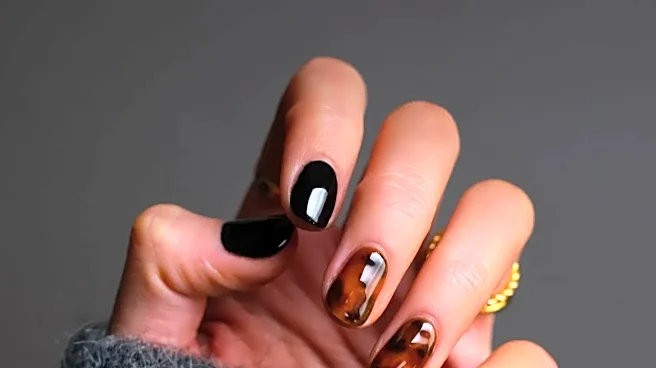
Costumes do the heavy lifting of storytelling, placing characters in a specific time, social class, or profession. But nail art is where the micro-story lives. It’s a personal choice, a ritual, and a canvas for identity that can telegraph a character's
nature without a single line of dialogue. A chipped, bitten-down nail tells a story of anxiety. A perfectly polished, weapon-like stiletto nail communicates power and control. In recent years, showrunners and directors have increasingly leaned on nail artists to embed crucial character details right at their fingertips. These details can reveal a character’s aspirations, inner turmoil, or even signal a major plot twist. It’s a subtle language that rewards the observant viewer, turning a simple manicure into a piece of the narrative puzzle.
The 'Euphoria' Effect: Nails as Emotional Armor
Perhaps no show has weaponized nail art as effectively as HBO's 'Euphoria'. Nail artist Natalie Minerva worked closely with the cast to create looks that function as an extension of each character's psyche. Maddy Perez (Alexa Demie), known for her fierceness, sports sharp, intricate, and often dark designs that mirror her confident and sometimes combative personality. Her Mugler-inspired nails in the season two premiere were described as 'sleek' and 'vampy,' a visual manifestation of her confidence. In contrast, Cassie Howard's (Sydney Sweeney) nails are often softer, rounder, and feature more stereotypically 'cutesy' designs, reflecting her perceived innocence and desire to be loved. The nails serve as emotional armor and a form of self-expression, changing as the characters navigate their chaotic lives. When Maddy discovers Cassie’s betrayal, her caged-pattern nails feel like a perfect, visceral symbol of her trapped rage.
Claws, Clues, and Classic Statements
Beyond the high school halls of 'Euphoria,' nail storytelling is everywhere. In 'The Batman,' Zoë Kravitz’s idea to give Selina Kyle natural, unpolished, claw-like nails added a feral, practical edge to her Catwoman. They weren’t glamorous; they were tools. Similarly, the menacingly long nails of Winifred Sanderson in 'Hocus Pocus' are instantly recognizable, functioning like cat claws that underscore her wicked intentions. On the other end of the spectrum, a manicure can be a plot device itself. In the film 'Blink Twice,' a nail artist's specific designs—red rabbits and blue kittens—become visual keys that help unlock her repressed memories, with each symbol representing a different part of her psychological journey. Even a classic red nail has power. From Madonna's 1930s-style half-moon manicure in 'Dick Tracy' to Marilyn Monroe's iconic glossy red in 'Gentlemen Prefer Blondes,' the choice signifies a timeless, bold femininity that needs no introduction.
A Canvas for Personality
Ultimately, the power of the on-screen manicure lies in its intimacy. It’s a detail that a character chooses for themselves, unlike a uniform they might be forced to wear. It can be an act of rebellion, a mark of conformity, an indicator of meticulous self-care, or a sign of utter chaos. In the surreal, multiverse-hopping 'Everything Everywhere All At Once,' Jobu Tupaki's wildly creative and ever-changing nails reflect her reality-bending powers and chaotic worldview. In the stylish speed-typing film 'Populaire,' the protagonist paints her nails to match the typewriter keys, transforming them into a tool for victory. These small choices add a layer of authenticity and depth that a broader costume choice might miss. They are a reminder that sometimes the biggest character statements come in the smallest packages.