




The Power of Playing a Little Less
When Miles Davis arrived on the bebop scene in the 1940s, jazz was a sport of virtuosity. Players like Charlie Parker and Dizzy Gillespie unleashed torrents of notes at blistering speeds. Davis, by contrast, built his identity on restraint. Advised by a teacher
to play without the heavy vibrato common at the time, he developed a clean, direct, and deeply personal tone. Where others shouted, Miles suggested. His early solos were melodic, thoughtful, and full of space, proving that the notes you don't play can be as powerful as the ones you do. This minimalist approach became the foundation of his first major innovation: cool jazz. The aptly named "Birth of the Cool" sessions introduced a more composed, orchestral sound to jazz, swapping frantic energy for relaxed tempos and nuanced textures.
That Iconic Muted Whisper
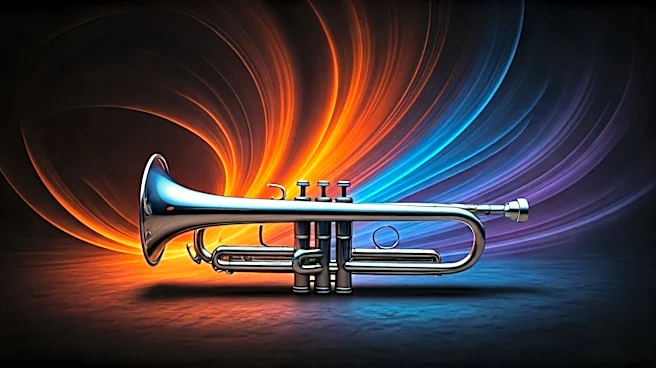
If there is one single sound associated with Miles Davis, it is the metallic, conspiratorial buzz of his trumpet with a Harmon mute. While mutes weren't new, Davis made this one his own. By removing the stem and playing extremely close to the microphone, he created a sound that was intensely intimate yet piercingly lonely. It was as if he was whispering a secret directly into the listener's ear. This technique wasn't just a gimmick; it was an extension of his playing philosophy. The Harmon mute stripped the trumpet of its brassy fanfare, transforming it into a sound that felt more like a human voice—vulnerable, sometimes fragile, but always emotionally direct. It became his sonic signature, a tool he would use across different eras of his music to convey a mood no one else could quite capture.
Inventing Freedom with Modal Jazz
By the late 1950s, Davis felt creatively stifled by the complex chord changes that defined bebop and hard bop. His solution was revolutionary. On the 1959 album "Kind of Blue," he largely abandoned chord-based improvisation for a new approach: modal jazz. Instead of navigating a dense highway of prescribed chords, soloists were given simple scales, or "modes," to explore for long stretches. This opened up the music, giving it a floating, meditative quality and handing immense melodic freedom back to the improviser. Davis himself described it as "a return to melody." It was a radical simplification that unlocked a new universe of expressive possibilities, and "Kind of Blue" became not only the best-selling jazz album of all time but a masterclass in creating structure that feels like pure freedom.
Plugging In and Blowing Up the Rules
Just as the world got comfortable with the cool, acoustic sound of "Kind of Blue," Davis blew it all up again. In the late 1960s, inspired by the raw energy of James Brown and Jimi Hendrix, he plugged in. Albums like "In a Silent Way" and especially the sprawling 1970 double LP "Bitches Brew" introduced electric pianos, electric guitars, and dense, rock-influenced rhythms into his music. This was jazz-rock fusion, a genre Davis essentially invented and which alienated many jazz purists. The music was chaotic, psychedelic, and built in the studio through marathon jam sessions that his producer, Teo Macero, would later edit into groundbreaking soundscapes. It proved that for Davis, jazz wasn't a set of rules; it was an attitude of constant, fearless exploration.
The Ultimate Talent Scout
Perhaps the most crucial element in how Miles Davis built his sound was his unparalleled genius as a bandleader. He didn't just play music; he directed it, often with just a look or a subtle gesture. His various bands were crucibles of talent, launching pads for some of the most important figures in jazz history: John Coltrane, Cannonball Adderley, Bill Evans, Herbie Hancock, Wayne Shorter, Chick Corea, and Tony Williams, to name a few. He had an incredible ear for musicians who were on the verge of something new, and he gave them the space and the push to find it. His sound was never just his trumpet; it was the collective chemistry of the brilliant, often young, musicians he assembled, challenging them to create the next sound with him.