
Inventing the Movie Star
In the early 1900s, actors were anonymous faces owned by studios. The dominant force, Thomas Edison's Motion Picture Patents Company, refused to credit performers, fearing they'd demand more money. Carl
Laemmle, an independent producer who founded what would become Universal, saw an opportunity. He poached a popular actress known only as “The Biograph Girl,” whose real name was Florence Lawrence. In a masterful publicity stunt, Laemmle’s new company, IMP, planted a story that she had been tragically killed, then took out ads to debunk the rumor, revealing she was alive, well, and now working for him—by name. For the first time, an actor's name became a marketing tool. The star system was born, creating a direct-to-consumer relationship that studios have relied on ever since. Suddenly, actors had leverage, and audiences had favorites to follow from film to film.
The Original Cinematic Universe
Long before anyone dreamed of superheroes assembling, Universal was building the first shared cinematic universe. In the 1930s and ‘40s, the studio produced a legendary cycle of horror films featuring Dracula, Frankenstein’s Monster, The Mummy, and The Wolf Man. These weren't just standalone hits; Universal realized their creations could coexist. The studio began making crossover films like Frankenstein Meets the Wolf Man, creating monster-mash events that were the 1940s equivalent of a modern blockbuster team-up. This strategy of leveraging a stable of intellectual property, where characters and storylines intersect across multiple films, is the direct ancestor of today's dominant franchise model, from the Marvel Cinematic Universe to Star Wars. Universal proved that a roster of compelling characters was a renewable resource that could power a studio for decades.
Welcome to the Dream Factory
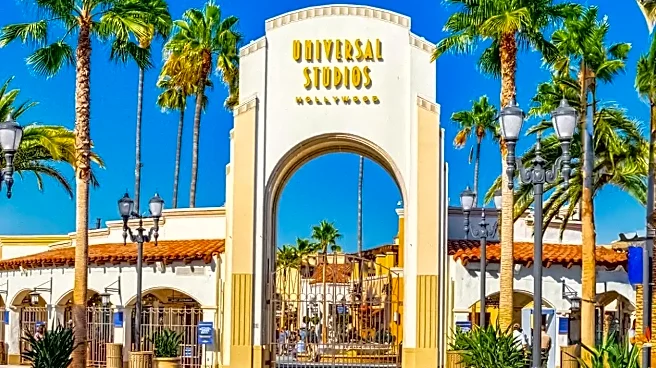
Carl Laemmle didn’t just build a studio; he built a tourist destination. When he opened Universal City in 1915, he did something unheard of: he invited the public in. For 25 cents, visitors could sit on bleachers and watch silent movies being filmed. While the arrival of sound put a temporary end to the open-door policy, the idea never died. In 1964, the studio tour was reborn with trams taking guests through active backlots. This wasn’t just a tour; it was the seed of a new business model. It transformed a production facility into a brand experience, laying the groundwork for the modern theme park. The tour eventually evolved to include attractions based on the studio's films, most famously with the Jaws ride in 1976, which cemented the powerful synergy between a hit movie and a theme park attraction that defines entertainment giants today.
Packaging Power and Assembling the Deal
The final piece of the template was assembled in the post-war era under the leadership of Lew Wasserman, a former talent agent who took over MCA/Universal. As the old studio system crumbled and long-term actor contracts disappeared, Wasserman pioneered the art of “packaging.” Instead of a studio developing a project from scratch, powerful agents like Wasserman would bring a pre-assembled package to the table: a star client, a director client, and a script client, all bundled together. The studio just had to provide the financing. This shifted power from the studios to the talent and their representatives, a dynamic that defines deal-making in Hollywood to this day. Wasserman's strategic vision turned Universal into a modern media conglomerate, integrating film, television production, and its burgeoning theme parks into a dominant force.