





Authenticity in a World of Costumes
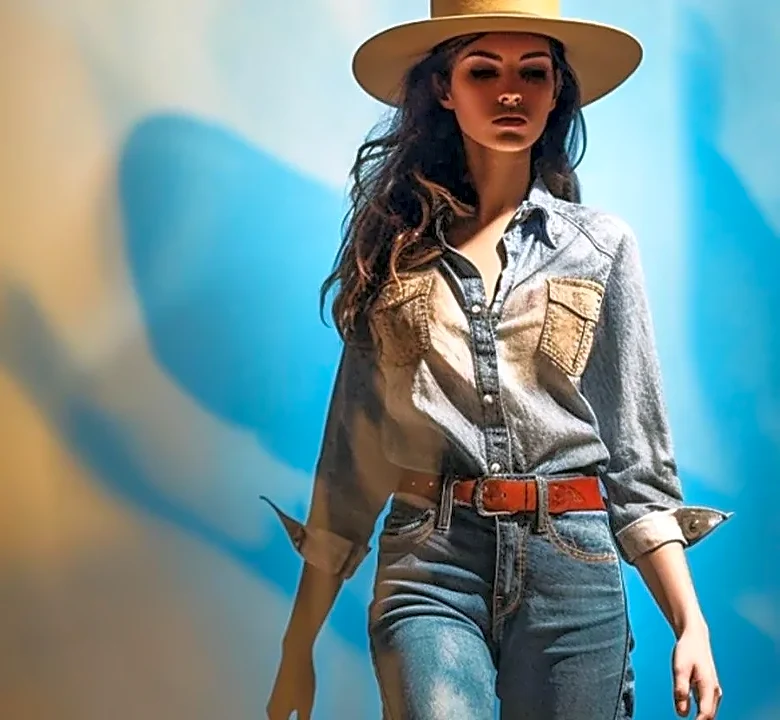
Recent years have seen a surge of Western-inspired fads, from fringe jackets and prairie dresses to cow-print everything. These trends often reduce the rich heritage of the American West to a visual mood board, a costume to be worn for a season and discarded.
They borrow the look without the substance. The cowboy boot, however, is different. It's not an accessory born from a trend cycle; it's a piece of functional American history that people have adopted as a style statement. While a fast-fashion fringe jacket is a fleeting nod, a quality pair of boots is an investment in craftsmanship and an authentic cultural symbol. This distinction is why the boots remain long after the festival-centric 'cowboy-core' fades.
Born From Function, Not Fashion
The modern cowboy boot’s staying power comes from its origins as a purpose-built tool. Developed in the mid-to-late 1800s from the legacy of Spanish vaquero and European cavalry boots, every element was designed for a life on horseback. The tall, sturdy shaft protected a rider’s legs from brush, thorns, and snake bites. The angled, stacked heel was designed to hook securely into a stirrup, preventing a rider's foot from slipping. Even the smooth leather sole and pointed toe served a purpose, allowing a rider to easily slide their foot in and out of the stirrup, a crucial safety feature. This foundation of pure utility gives the boot an integrity that fashion-first items lack. It was made to last, not just to be seen.
The Ultimate Symbol of American Individualism
Beyond its practical roots, the cowboy boot became a powerful cultural symbol. Thanks to Hollywood's Westerns in the 1930s and '40s, the boot became synonymous with heroic characters and the American spirit. It represented the rugged individualism, freedom, and resilience of the mythic American West. This symbolism was later adopted by counter-culture figures and rock stars in the '60s and '70s, from Bob Dylan to The Rolling Stones, who wore them as a sign of rebellion and nonconformity. Today, that legacy continues. Pop stars like Taylor Swift and Beyoncé have embraced the boot, connecting it to confidence and self-expression for a new generation. Wearing a cowboy boot is a way to align yourself with a story of independence, a narrative that never goes out of style.
A Canvas for Craft and Personality
A key reason for the boot's longevity is its remarkable versatility. The basic, functional silhouette has proven to be an endlessly adaptable canvas. While early boots were simple and utilitarian, they soon became objects of expressive craftsmanship, featuring intricate stitching, colorful leathers, and decorative inlays. This allows them to be both a rugged work boot and a piece of high fashion. You can find simple, durable roper boots designed for comfort and walking, or flamboyant, custom-made creations with exotic skins and bold patterns. This adaptability means the cowboy boot can be interpreted for any context—from a ranch to a runway, a honky-tonk to a city street—without losing its core identity. It can be dressed up or down, making it a timeless wardrobe staple that transcends fleeting trends.