






The America 250 Challenge
July 4, 2026, marks the 250th anniversary of the signing of the Declaration of Independence, and the nation is gearing up for a multi-year commemoration known as the Semiquincentennial. The goal, spearheaded by the America250 commission, is to educate,
engage, and unite. But in a deeply divided country, that’s a tall order. Commemorations have become fraught with political tension, with dueling commissions and concerns over which version of American history gets told. For parents, this presents a minefield. How do you find an experience that is educational without being dry, celebratory without being exclusionary, and honest without overwhelming a child? Many planned events, from festivals to historic site tours, offer great value but can be geographically limited or present complex narratives that are difficult for kids to grasp.
Animation Cuts Through the Noise
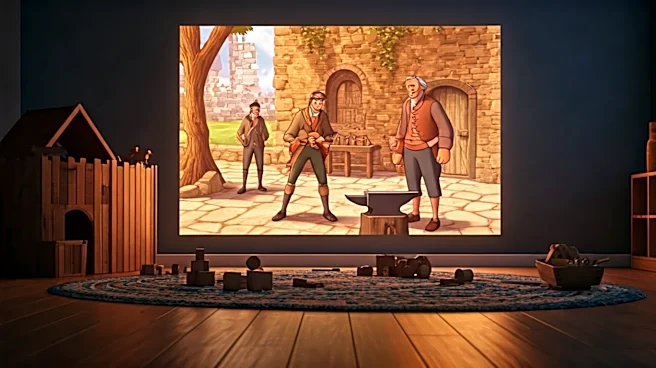
This is where historical animation shines. Cartoons have a unique ability to distill complex topics into engaging, digestible narratives. They can translate abstract ideas—like liberty, representation, and revolution—into concrete stories with characters kids can root for. Animation is a visual medium that simplifies without being simplistic, using storytelling, color, and movement to capture and hold a child’s attention in a way a textbook or even a live-action reenactment often can't. By presenting events through the eyes of relatable young protagonists, historical cartoons give children a foothold in stories that might otherwise feel distant and irrelevant.
A Proven Track Record of Success
This isn't just a theory; it’s a proven model. Shows like the PBS series Liberty's Kids have become beloved classics for a reason. Airing in the early 2000s, the series followed a trio of teenage reporters during the American Revolution, witnessing key historical events firsthand. It didn’t shy away from complexity; it featured a young English loyalist, a patriotic colonist, and a French orphan, allowing for diverse viewpoints on the conflict. The show tackled difficult subjects like slavery and the costs of war with a maturity that respected its young audience. By blending historical fact with compelling character arcs, Liberty's Kids made the nation’s founding accessible and emotionally resonant for a generation of viewers.
Building Empathy, Not Just Memorizing Dates
The greatest strength of historical animation is its power to build empathy. When a child watches an animated character grapple with the challenges of the past, history ceases to be a list of names and dates. It becomes a human story. This format excels at showing, not just telling. A character's loyalty being tested, their fear during a battle, or their joy at the prospect of freedom are universal emotions. This connection is crucial for genuine learning. It sparks curiosity and encourages children to ask bigger questions, fostering the critical thinking skills needed to engage with history thoughtfully. PBS is continuing this tradition with its America @ 250 programming, including animated shorts designed to connect kids to American history and civics.
The 'Safest' Part of the Bet
So why is it the “safest” bet? In an era where discussions about history are often polarizing, animation can serve as a unifying medium for families. Well-crafted animated series are designed for a co-viewing audience, giving parents and children a shared foundation for conversation. The format is inherently less confrontational than a heated cable news debate or a politically charged museum exhibit. It allows for the introduction of difficult topics—like the contradictions in the Declaration of Independence's promise of equality—in a thoughtful, story-driven context. This creates an opportunity for families to discuss these ideas together, in the privacy of their own living room, on their own terms.