







A Collision of Numbers and Scale
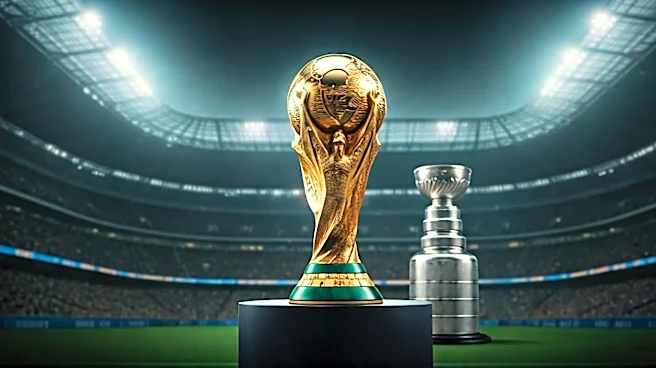
Let’s start with the most obvious difference: the sheer, mind-boggling scale. The Stanley Cup Final is a massive television event in North America, drawing several million viewers in the U.S. and Canada for its biggest games. It dominates sports talk radio and captures the attention of entire cities. But the World Cup operates in a different reality. The 2022 FIFA World Cup Final between Argentina and France attracted an estimated 1.5 billion viewers globally. That’s not a typo. It’s a number that approaches the population of China or India. While millions of Americans tune into the NHL’s championship, literally billions of people across the planet—from bustling megacities to remote villages—organize their lives around the World Cup for an entire month.
The Super Bowl is the only single-day U.S. sporting event that even begins to approach this level of viewership, and the World Cup Final dwarfs it by a factor of ten on a global stage.
The Power of Nation vs. Club
This is the most crucial distinction. The Stanley Cup is the pinnacle of club hockey. Players from dozens of countries come together on privately owned teams representing specific North American cities. A fan in Boston cheers for the Bruins, not necessarily for Team USA. The allegiance is to a logo, a city, and a franchise. The World Cup is a tournament of nations. It’s about national identity, pride, and history played out on a soccer pitch. When Brazil plays Germany, it’s not just two teams; it’s two countries with deep, sometimes painful, World Cup histories facing off. The players wear their country’s flag, not a corporate logo. The passion stems from patriotism and a collective national consciousness that a city-based club team, no matter how beloved, can never fully replicate. It’s the reason a victory can trigger a national holiday and a loss can plunge a country into a collective depression.
The Four-Year Cycle of Scarcity
The Stanley Cup is awarded every single year. A team that suffers a heartbreaking loss in the Final has a chance to redeem itself the very next season. This annual rhythm creates sustained rivalries and a constant churn of storylines. The World Cup, however, happens only once every four years. This scarcity gives it an almost mythical weight. For a professional player, a career might only span three or four World Cup cycles, and they might only get one shot at glory in their prime. This long wait builds an incredible sense of anticipation and consequence. Entire generations of fans grow up marking time by World Cups—remembering where they were in ’94, ’02, or ’14. The four-year gap makes each tournament a precious, unmissable global event rather than the climax of an annual league season.
A Stage for Global Politics
Because the World Cup is a tournament of nations, it inevitably becomes a platform for geopolitics, culture, and soft power. Hosting the tournament is a multi-billion dollar bid by a country to announce its presence on the world stage. Diplomatic tensions between competing nations often spill onto the field, adding layers of subtext to the matches. We see players making political gestures, fans displaying national symbols, and global leaders attending games to support their teams and engage in sideline diplomacy. The Stanley Cup playoffs can certainly reflect local or even national pride, but they rarely, if ever, carry the weight of international relations. The World Cup is more than a sporting event; it’s a global cultural festival where sport, politics, and national identity are inextricably linked for 30 days.