





Defensive Shape: The Neutral Zone Trap on Grass
In hockey, you know the 1-3-1 or the 2-1-2 forecheck. It’s not about chasing the puck carrier; it’s about taking away passing lanes and forcing the opponent into a specific, predictable area of the ice. Soccer defense is the same principle, just on a much
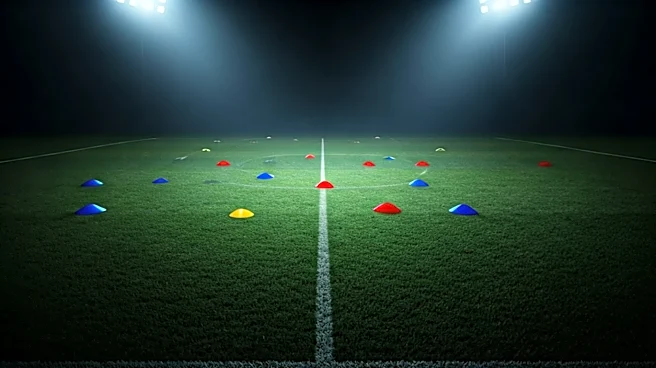
larger scale. When you see a team in a 4-4-2 formation, those numbers aren't just positions. They represent two rigid banks of four players moving in unison. Their job is to shrink the field, denying space between the lines. Like a neutral zone trap, the goal is to make the field feel small and congested, forcing a bad pass or a turnover. The ball is the puck, but the ultimate target is space. A good soccer defense doesn't always win the ball; it dictates where the opponent is *allowed* to have it.
The High Press: An All-Out Forecheck
Ever watch a team dump the puck in and send two forwards screaming in after it, trying to create chaos and force a mistake from the defenseman behind the net? That’s a forecheck. The soccer equivalent is the “high press.” Instead of sitting back in their defensive shape, a team will push its forwards and midfielders high up the pitch to swarm the opposing defenders as soon as they get the a. The goal is identical: pressure the opponent in their most vulnerable area, force a turnover close to their goal, and create a high-quality scoring chance out of thin air. It’s a high-risk, high-reward strategy. Get it right, and you score an easy goal. Get it wrong, and one long pass can beat your entire team, leaving you exposed—just like when two forecheckers get caught deep and the other team breaks out on a 3-on-2.
The Center-Back: Your Stay-at-Home Defenseman
In hockey, there’s the puck-moving defenseman, and then there’s the guy whose sole purpose is to clear the crease. He’s big, he’s mean, and his job is to block shots, win board battles, and make sure the goalie has a clear line of sight. This is your soccer center-back. They are the twin towers of the defense, positioned squarely in front of the goal. Their primary job isn’t to be flashy; it’s to win headers from crosses, make bone-jarring tackles on forwards who get too brave, and hoof the ball 50 yards downfield if necessary to relieve pressure. They are the guardians of the most dangerous area on the field—the penalty box—and, like their hockey counterparts, their best work often goes unnoticed until the moment they save a certain goal.
The Holding Midfielder: Your Two-Way Center
Think of the best defensive forwards in the NHL—the Patrice Bergerons, the Anze Kopitars. They’re not just offensive stars; they’re masters of the 200-foot game. They are always in the right position to break up a play in their own zone and immediately turn it into an attack going the other way. In soccer, this is the holding midfielder. Positioned just in front of the defenders, this player is the engine, the pivot, and the brain of the team. They read the game, intercept passes, shield the back line, and connect the defense to the attack with a single, smart pass. A great holding midfielder makes everything look easier for everyone else, snuffing out danger before it starts and launching the counter-attack, much like a Selke Trophy winner turning a blocked pass into a breakaway.
The Offside Trap: A Coordinated Power Play Breakout
The offside rule in soccer can feel arbitrary, but elite defenses weaponize it. The “offside trap” is a coordinated move where the entire defensive line steps up in unison just before a pass is played, catching an attacker in an offside position. It’s a high-stakes gamble that requires incredible timing and communication. There’s no perfect hockey analog, but think of the *spirit* of a perfectly executed power play breakout. When all five players move as one, hitting their marks and making their passes at the exact right second to gain the zone with speed and control, it’s a thing of beauty. The offside trap is the defensive version of that same synchronicity—a risky, practiced, and deeply satisfying maneuver that can completely neutralize an opponent's attack.