




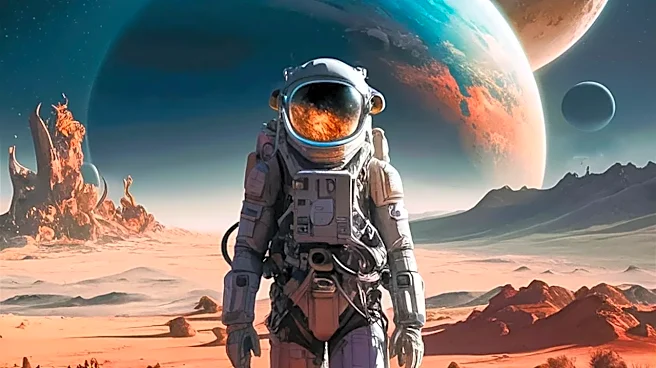
The Choice for Two Worlds
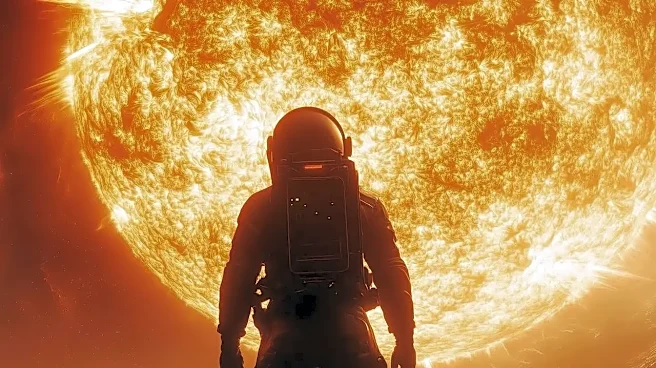
To understand the ending, you have to appreciate the stakes. After a harrowing journey of discovery alongside his alien engineer friend, Rocky, amnesiac-turned-astronaut Ryland Grace has the solution to save Earth. An organism called Taumoeba can devour
the sun-eating Astrophage and restore balance to the solar system. But there's a catastrophic problem: Rocky’s people, the Eridians, will be wiped out by the same plague, and their ship is crippled. Grace has just enough fuel to get himself and the life-saving Taumoeba home to a hero’s welcome. The alternative? Send the solution to Earth on unmanned probes and use every last drop of his fuel to divert course, travel for years, and save his one and only friend. The probes might fail. He will almost certainly die in deep space, stranded and alone. This is the choice.
The Cost of True Friendship
The devastating part of this choice isn’t just about the risk; it’s about what Grace gives up. Throughout the novel, his slowly returning memories reveal a man who never wanted to be a hero. He was a middle school science teacher who was terrified of the mission and was ultimately drugged and forced into it against his will. His journey in space, and his friendship with Rocky, is what finally gives him a sense of purpose and courage. Choosing to save Rocky means consciously abandoning any chance of returning to the home he now remembers. He must sacrifice his species, his planet, and the very identity he just reclaimed. He chooses to save the only friend he has in the universe, accepting permanent, absolute isolation as the price. It’s an act of choosing personal connection over abstract duty, a decision that redefines heroism not as a grand gesture for humanity, but as a quiet, personal sacrifice for another being.
Where Hope Is Forged
This is where the story’s seemingly bleak turn becomes its most hopeful. The novel argues that hope isn't found in a simple, triumphant victory. It’s born from the decision to do the right thing when it costs you everything. Grace’s choice elevates “Project Hail Mary” from a clever survival story into a profound statement on altruism. The hope isn't just that humanity gets a fix for its sun problem. The real hope is that a flawed, reluctant man, when faced with the ultimate test, chooses selfless love for his friend over his own life and a hero’s parade. He doesn't do it because he's a perfect astronaut; he does it because Rocky made him a better person. This decision transforms him from someone who was forced to be a savior into someone who chooses to be one, on his own terms.
A Different Kind of Hero's Welcome
The novel's beautiful epilogue reveals the result of this choice. Grace succeeds. He saves Rocky, gets him to Erid, and delivers the Taumoeba that will save their world. And he survives. The Eridians, in their immense gratitude, build him a habitat where he can live out his days. The final scene finds Grace back in his element: teaching science to a classroom of curious, spider-like alien children. He finds purpose not in being celebrated as a global hero on Earth, but in quiet service to the new world that adopted him. This ending is far more satisfying than a ticker-tape parade. It’s a found family, earned through the most extreme act of sacrifice. The hope is not just survival, but the discovery of meaning and belonging in the last place in the universe he ever expected to find it.