
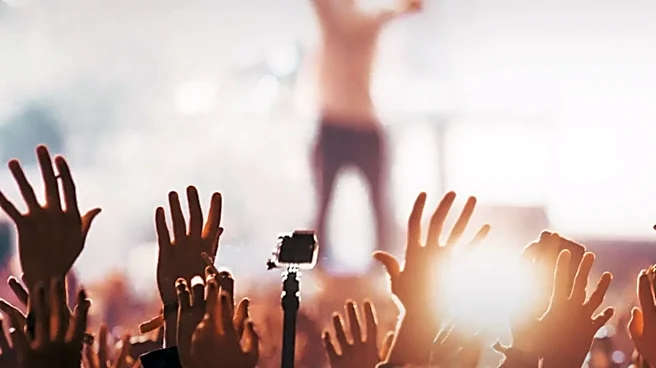
The Artist’s High-Stakes Bet
For an artist, a festival main stage feels like the perfect launchpad. With thousands of fans and industry eyes watching, debuting a new song seems like a savvy move. It’s a real-time market test, a chance to generate buzz for an upcoming album, and a way
to signal artistic evolution. In the best-case scenario, a killer new track goes viral overnight, captured on a thousand phones and generating momentum that money can't buy. This is the dream: to create a magic moment where fans feel they were part of something special and exclusive. Artists like Billie Eilish have intentionally debuted new songs on tour to create these intimate fan moments, recapturing the feeling of their earlier, smaller shows. The logic is sound; in a saturated market, a memorable live debut can cut through the noise far more effectively than a standard digital release. But this strategy is built on a crucial and often misjudged assumption: that the audience is there for a preview, not a party.
The Psychology of the Singalong
A festival crowd is a unique entity. Unlike a standalone concert for a specific artist, a festival audience is a mix of die-hard fans, casual listeners, and curious passersby. They've been standing for hours, enduring the elements, and navigating massive crowds. Their energy is a finite resource. When they flock to a stage, they are primarily seeking a communal, cathartic experience. They want the satisfaction of screaming lyrics they know by heart, of feeling a shared history with the thousands around them. Hits provide that anchor. An unreleased song, no matter how good, breaks that contract. It demands active listening when the crowd wants to participate. The energy shifts from a collective release to a more passive, observational state. The sea of singing faces turns into a field of politely nodding heads. The chatter at the back of the crowd often grows louder, and the momentum the artist worked so hard to build with their opening hits can evaporate in minutes.
When the Gamble Doesn't Pay Off
The fallout from a poorly received new track can be brutal. It’s rarely outright booing; it’s something far more chilling: indifference. The energy dips, the connection frays, and the artist is left performing in a vacuum. Industry experts often advise balancing a setlist carefully, suggesting no more than a few new songs spaced out between fan favorites. This is because clustering new material can feel like a self-indulgent rehearsal, leaving audiences feeling alienated. There are countless stories of mid-set lulls where a band introduces a string of unknown tracks, prompting a mass exodus to the beer tent or another stage. While an artist might be incredibly proud of their new direction, a festival slot is less about their personal journey and more about their role as a purveyor of a specific, high-energy experience. Ignoring that role to showcase unproven work is a risk that has derailed many otherwise stellar performances.
The Rare Exceptions to the Rule
Of course, sometimes it works spectacularly. An artist at the absolute peak of their cultural relevance, like a surprise headliner or a act with immense fan devotion, can get away with it. When an artist has built enough goodwill, the audience trusts them to deliver, even with unfamiliar material. A Reddit thread discussing the topic noted that artists like RAYE successfully integrated new material on tour, making fans feel part of an exclusive club. Similarly, legacy acts with a history of improvisation and evolution, such as the Grateful Dead, built a following that expected the unexpected. For these artists, a new song isn't an interruption; it's the main event. The key difference is context and trust. For most performers, however, especially those still building their festival reputation, the risk far outweighs the reward. The goal is to win over a diverse crowd, and the most reliable way to do that is with the songs that got them on that stage in the first place.