









From Damage to Diary
For decades, the prevailing wisdom has been that perfection is paramount. A hole, a stain, or a tear devalues a piece of clothing, marking it for the donation pile or, worse, the landfill. This mindset is a direct product of fast fashion, which treats
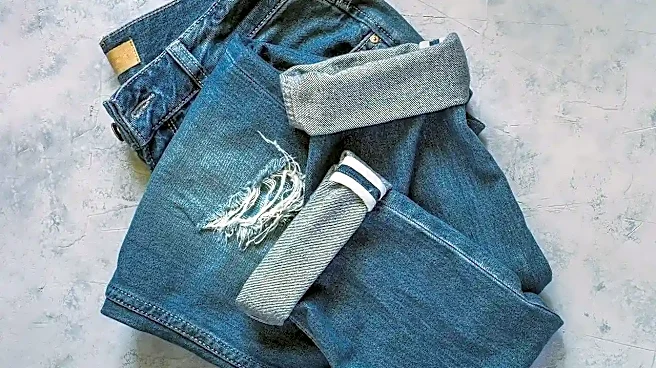
clothes as disposable commodities. But a counter-movement is gaining traction, one that sees a repair not as a sign of poverty or compromise, but as a mark of character. Known as 'visible mending', this practice turns the act of fixing into a creative statement. Instead of hiding the evidence of wear, it highlights it, adding a new, visible layer to the garment's history. A mended knee on a pair of jeans or a colorful patch on an elbow doesn't just extend the item's life; it tells a story of where it's been and the care taken to keep it going.
The Philosophy of the Beautiful Flaw
This embrace of imperfection has deep roots in Japanese aesthetics. The concept of 'wabi-sabi' finds beauty in things that are imperfect, transient, and incomplete. It's the idea that an object's history—its scuffs, its wear, its repairs—is something to be honored, not hidden. We see this most famously in 'kintsugi', the art of repairing broken pottery with seams of gold lacquer. The technique doesn't try to conceal the break; it celebrates it, suggesting the object is more beautiful for having been broken. Visible mending applies this same philosophy to textiles. Techniques like 'sashiko', a form of decorative reinforcement stitching, and 'boro', the practice of patching textiles over generations, were born from necessity but evolved into an art form. A garment treated with these methods becomes a rich, textured piece, a physical record of its journey.
Sustainability as a Style Statement
Choosing to visibly mend a garment is also a quiet act of rebellion against a wasteful system. The fashion industry produces an enormous amount of textile waste annually, with many garments being worn only a handful of times before being discarded. By simply extending the life of a piece of clothing by an additional nine months, its carbon, water, and waste footprint can be reduced by as much as 30%. Visible mending offers a tangible way to participate in a more circular economy. It turns a personal choice into a public statement of values, demonstrating a commitment to sustainability and a rejection of throwaway culture. Brands like Patagonia have championed this ethos with their Worn Wear program, encouraging customers to view repairs as badges of honor. In this context, a stitched-up tear becomes a symbol of conscious consumption.
The New Currency of Character
In a world of mass-produced goods, true uniqueness has become a form of luxury. A visibly mended garment is, by its very nature, one-of-a-kind. No two repairs are exactly alike, and the choices made—the color of the thread, the texture of the patch, the style of the stitch—infuse the item with the personality of its owner. This process creates a deeper emotional connection to our belongings. Rather than being passive consumers, we become active participants in the life of our clothes. This changes the definition of value. It's no longer just about the brand name or the original price tag. Instead, value is found in the story, the craftsmanship, and the personal history embedded in the fabric. A sweater that has been darned with a contrasting color yarn is not just a repaired sweater; it's your sweater, complete with a story that no one else's can match.