






In the world of horror franchises, two reboots of the same iconic series, released just 11 years apart, tell a fascinating story of evolving Hollywood economics. Why did one merely succeed, while the other became a box office monster?
2007: A Brutal Remake for a Brutal Era
When Rob Zombie's
'Halloween' hit theaters in 2007, it was a product of its time. The mid-2000s horror landscape was dominated by the raw, gritty, and often sadistic sensibilities of 'torture porn' movies like 'Saw' and 'Hostel'. Zombie, a filmmaker with a distinct, grimy aesthetic, was hired to completely reimagine John Carpenter's classic. His approach was not to continue the story, but to tear it down and rebuild it, starting with a lengthy and controversial origin story for Michael Myers. Made for a modest $15 million, the film was a solid financial success. It broke the Labor Day weekend box office record at the time and went on to gross over $80 million worldwide. For Dimension Films and the Weinstein Company, this was a win. They took an established IP, applied a trendy genre filter, and turned a tidy profit. However, the film was polarizing. Many fans and critics disliked the decision to demystify Michael Myers by explaining his murderous rage with a backstory of childhood abuse. The film's success was front-loaded; it opened strong but audience enthusiasm waned, and its 2009 sequel saw a significant drop-off in box office returns. The 2007 film represented a traditional studio approach: a moderately-budgeted remake that cashed in on name recognition but struggled with long-term fan investment.
2018: The Lean, Mean 'Requel' Machine
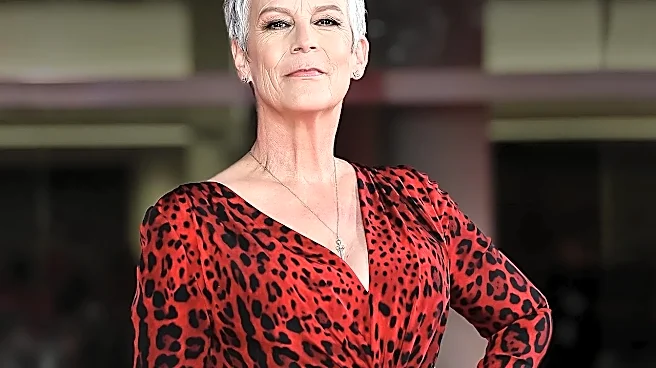
Eleven years later, the horror landscape had shifted dramatically. Jason Blum's Blumhouse Productions had perfected a new model: low-budget, high-concept horror with a strong creative vision. Their approach to 'Halloween' was surgical and brilliant. Instead of a full remake, director David Gordon Green and co-writer Danny McBride pitched a 'requel'—a direct sequel to the 1978 original that erased the messy continuity of all other sequels. This masterstroke did two things: it respected the original and jettisoned the convoluted storylines (like Michael and Laurie being siblings) that had bogged down the franchise. More importantly, it brought back Jamie Lee Curtis as a battle-hardened Laurie Strode, creating a powerful narrative hook of a survivor confronting her trauma. Produced for a scant $10 million, the film was an economic juggernaut. It exploded at the box office, earning a staggering $76.2 million in its opening weekend alone and ultimately grossing over $255 million worldwide. That's a return of more than 25 times its production budget. This wasn't just a hit; it was a phenomenon that rewrote the rules for legacy franchises.
Strategy, Nostalgia, and the Blumhouse Effect
The economic difference between the two films boils down to strategy. The 2007 film was an auteur-driven remake that replaced the original's DNA. It gambled on audiences wanting a new, darker version of a familiar story. The 2018 film was a fan-driven restoration. It gambled on audiences wanting to return to the feeling of the original, amplified by 40 years of waiting. Bringing back Jamie Lee Curtis and original director John Carpenter as a composer and executive producer was a signal to fans that this new entry understood the source material. The Blumhouse model was also key. By keeping the budget incredibly lean, the studio minimized risk and maximized potential profit. Universal Pictures' marketing machine then expertly sold the film not just as another slasher movie, but as a major cultural event: the final, epic confrontation between two of horror's greatest icons. While Rob Zombie's film was financially successful by any reasonable metric, the 2018 version demonstrated a more potent formula: blend genuine nostalgia with a lean production model and a compelling, streamlined story. It proved that sometimes, the best way to reboot a franchise isn't to start over, but to go back to the beginning.