


The Launchpad for Audacious Cinema
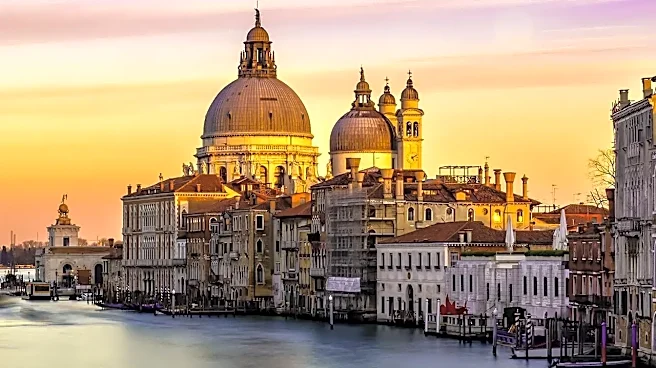
Every year, the film world turns its eyes to the picturesque Lido in Venice, not just for the glamour, but for a glimpse into the future of cinema. More than any other major festival, Venice has become the preeminent launchpad for films that refuse to be put
in a box. While Cannes leans into auteur reverence and the Oscars often favor more conventional, broadly appealing narratives, Venice consistently places its most prestigious bet, the Golden Lion, on the weird, the challenging, and the genre-blending. This isn't an accident; it's a core part of the festival's identity. For years, the festival, under the leadership of directors like Alberto Barbera, has curated lineups that champion originality over formula, effectively telling the global film community that the most exciting work is happening in the spaces between established genres.
A Pattern of Unconventional Winners
Look at the list of recent Golden Lion recipients, and a clear pattern emerges. In 2023, Yorgos Lanthimos's “Poor Things” took the prize—a film that’s simultaneously a Victorian sci-fi, a feminist coming-of-age story, a dark comedy, and a work of body horror. A few years prior, Chloé Zhao's “Nomadland” won not only the Golden Lion but went on to win the Oscar for Best Picture. It was a quiet, meditative film that blurred the lines between documentary and fiction, casting real-life nomads alongside actress Frances McDormand. In 2019, Todd Phillips' “Joker” shocked many by winning the top prize. It was a film based on a famous comic book villain, yet it was executed as a gritty, character-driven psychological thriller reminiscent of 1970s art-house cinema. Before that, Guillermo del Toro’s “The Shape of Water,” a romantic fantasy about a mute cleaning woman falling in love with a captured fish-man, also began its journey to Best Picture glory with a Golden Lion win. Even Laura Poitras's 2022 winner, “All the Beauty and the Bloodshed,” was an unconventional choice, a documentary that blended the personal story of artist Nan Goldin with a political crusade against the Sackler family.
Why Genre-Bending Resonates at Venice
So, how does this happen? The answer lies in the festival’s philosophy and its function within the awards ecosystem. Venice juries, often composed of fellow uncompromising artists, seem to prioritize films that offer a singular vision. They reward filmmakers who aren’t just telling a story but are inventing a new language to tell it in. A film like “Poor Things” or “Joker” isn’t just a good example of its genre; it’s a challenge to the very idea of genre itself. By awarding these films, Venice sends a powerful message: innovation matters more than classification. This embrace of the unconventional has also made Venice an incredibly effective launchpad for the Academy Awards. The festival's late August/early September timing is perfect for building momentum that can last through the entire awards season. A win at Venice gives a difficult-to-market film an immediate stamp of undeniable prestige, forcing distributors and audiences to take it seriously.
The Ripple Effect on Hollywood
The festival's impact extends far beyond the Lido. When a film like “Joker” wins the Golden Lion, it gives a major studio like Warner Bros. permission to take more creative risks. When a hybrid drama like “Nomadland” sweeps Venice and then the Oscars, it validates a quieter, more humanistic style of filmmaking that often struggles for attention. Venice acts as a cultural tastemaker, creating a critical consensus around a film that can be difficult to ignore. It provides a crucial bridge between daring international cinema and the more risk-averse Hollywood machine. The Golden Lion doesn’t just honor a film; it legitimizes its ambition. It tells the rest of the world that a monster movie can be a Best Picture contender and that a documentary can have the dramatic weight of any scripted narrative.