




The Freedom of the Open Road
The story begins after World War II, when America collectively got behind the wheel. A booming economy, newfound leisure time, and a surge in car ownership turned the automobile into a symbol of freedom. Families, no longer tethered to their hometowns,
sought adventure on the open road. This era gave rise to the great American road trip, a cultural rite of passage. At the heart of this movement was U.S. Route 66. Dubbed the "Mother Road" by John Steinbeck, this highway, which stretched from Chicago to Los Angeles, became the main artery for tourists, dreamers, and migrants heading west. It wasn't just a way to get from one place to another; it was the path to the American Dream, a ribbon of pavement across a landscape of endless possibility.
Oases of Liquid Fire
All those travelers needed places to eat, sleep, and refuel. Along highways like Route 66, a new ecosystem of mom-and-pop businesses emerged: diners, motels, and gas stations. To stand out in the vast, open landscape, they needed a way to grab the attention of a driver speeding past. The perfect solution had arrived from France in the 1920s: neon. The first neon signs in the U.S., installed at a Los Angeles Packard dealership in 1923, were so mesmerizing they literally stopped traffic. Dubbed "liquid fire," the vibrant, glowing tubes were visible day and night, cutting through the darkness of rural highways. They became beacons for weary travelers, promising a hot meal, a soft bed, or a full tank of gas just ahead.
The Twilight of the Mother Road
For a few golden decades, these neon-lit roadsides thrived, creating a unique American aesthetic. But the very popularity of road travel led to the decline of these routes. In 1956, President Eisenhower signed the Federal-Aid Highway Act, creating the Interstate Highway System. These massive, efficient freeways were designed for speed, bypassing the small towns and quirky roadside businesses that defined roads like Route 66. As traffic vanished, so did the customers. Motels closed, diners went dark, and their elaborate neon signs flickered out, leaving behind ghost towns and relics of a bygone era. Route 66 was officially decommissioned in 1985, but its spirit was already fading.
Reborn in American Mythology
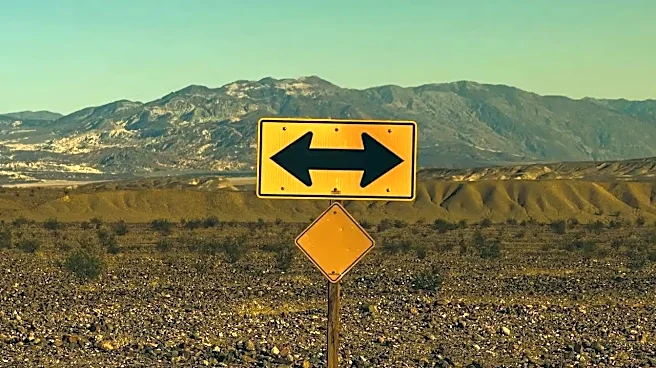
Just as the physical roads declined, their imagery was being immortalized in popular culture. The desert landscape, once seen as merely empty, became a powerful symbol in film and literature. It represented a place of testing, freedom, and escape from the confines of society. Road movies and film noir captured the dual feeling of the desert highway: the romantic freedom of the journey and the lonely isolation of the landscape. Photographers and artists were drawn to the fading beauty of rusted gas pumps and peeling motel signs set against the vast, dramatic sky. They saw that the combination of the desolate, natural landscape and the bright, man-made promise of a neon sign created a powerful metaphor for America itself—a mix of boundless optimism, commercial hustle, and a haunting sense of lost dreams.