




Myth: It’s Just Lazy, Unskilled Defending
The common perception is that parking the bus is what teams do when they have no other ideas: just get all ten players behind the ball and hope for the best. It’s seen as a brutish, thoughtless approach—the tactical equivalent of a toddler hiding behind a curtain.
The idea is that any team can do it, provided they’re willing to abandon all attacking ambition and simply clog up space near their own goal.
Fact: It Requires Immense Discipline and Organization
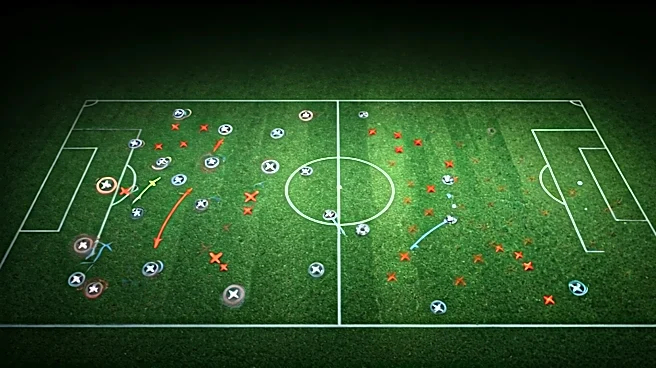
Successfully parking the bus is one of the most mentally and physically demanding tasks in sports. It’s not about just standing there; it’s about maintaining a compact, organized shape for 90 minutes while a world-class opponent tries to pull you apart. Players must maintain perfect spacing, track runners, communicate constantly, and resist the urge to chase the ball and break formation. A single lapse in concentration can lead to a goal. José Mourinho, the manager who popularized the term (initially as a criticism of Tottenham in 2004), later perfected it. His 2010 Inter Milan side gave a masterclass against a legendary Barcelona team, with players like Wesley Sneijder and Samuel Eto'o operating as auxiliary full-backs in a stunning display of collective will.
Myth: It’s a Tactic for Small, Hopeless Teams
The stereotype suggests that only massive underdogs with no chance of winning a 'proper' game resort to this tactic. It’s seen as an admission of inferiority, a white flag disguised as a defensive strategy. When a lesser-known team does it against a global giant, it’s expected. But for a major club to do it? Unthinkable.
Fact: Champions Use It to Win the Biggest Trophies
Some of the most celebrated triumphs in modern soccer were built on the back of a well-parked bus. After Mourinho’s Inter won the Champions League in 2010, his former club Chelsea did the same in 2012. Facing Barcelona at their peak, Roberto Di Matteo’s Blues absorbed wave after wave of attack, defending with heroic desperation over two legs to pull off one of the greatest upsets in the competition's history. They went on to win the final against Bayern Munich in a similar fashion. On the international stage, Greece’s shocking victory at Euro 2004 was a monument to defensive pragmatism. These weren't just plucky underdogs; they were champions who understood that controlling space without the ball is just as important as controlling it with the ball.
Myth: It’s Fundamentally Cowardly
This is the core of the complaint. Critics argue that parking the bus is “anti-football.” It goes against the spirit of the game, which is supposed to be about adventure, creativity, and scoring goals. To choose not to attack, they say, is to show a lack of courage and a disrespect for the fans who paid to be entertained.
Fact: It’s a Pragmatic Response to Overwhelming Odds
Is it cowardly for a boxer to use their footwork and defense to avoid the knockout punch of a heavier opponent? Or is it smart? Parking the bus is a strategic calculation. It’s a manager looking at an opponent with vastly superior attacking talent and deciding that a wide-open, end-to-end game is suicide. The goal is to survive, frustrate the opponent, and create a different kind of tension: the drama of the siege. It forces the attacking team to ask questions of themselves and creates the potential for a smash-and-grab win via a swift counter-attack or a set piece. It’s not a lack of courage, but a different kind of bravery—the courage to suffer, absorb pressure, and trust the plan.