



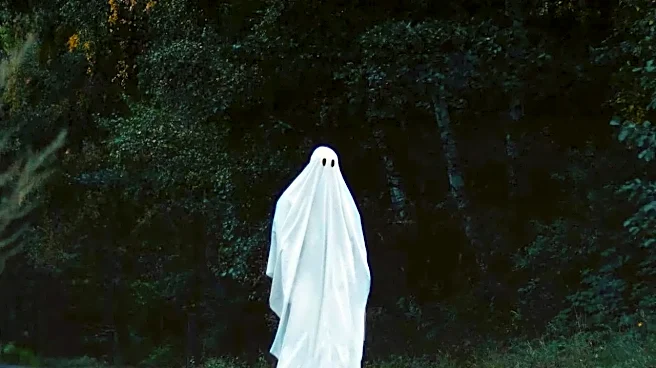

The best horror movie trailers terrify you without showing you much at all. A fleeting shadow, a strange noise, a character's terrified face—that's all it takes. This isn't accidental; it's a masterful art of psychological manipulation.
The Fear of the Unknown
The cardinal rule
of horror is that nothing a CGI artist can design is as terrifying as what the human mind can conjure. Trailer editors exploit this psychological truth by deliberately withholding a clear look at the monster, creature, or killer. This technique forces the audience to fill in the blanks, projecting their own deepest fears onto the screen. It's a principle seen in classic cinema, like the original 'Jaws', where the shark is barely shown, or the first 'Alien' trailer, which relied on panic and atmosphere instead of creature shots. By hinting at a threat rather than revealing it, editors transform a two-minute preview into a canvas for our collective anxiety, creating a much more personal and potent sense of dread. The trailer becomes a question, and the movie promises the answer.
The Power of Sound Design
When the visuals are restrained, the audio does the heavy lifting. Modern horror trailers are masterclasses in sound design, using a sonic palette to create unease. Editors and sound designers blend unsettling noises—a creaking floorboard, distorted whispers, scraping metal—with jarring silence to keep the audience on edge. Recent trends show a move away from massive orchestral scores toward more minimalist and textural soundscapes. A single, unsettling drone or a recurring sonic motif, like the clicking sound in 'Hereditary', can become the trailer's terrifying signature. This focus on sound creates an atmosphere of dread that visuals alone cannot achieve. The strategic use of silence, or 'negative space', makes the eventual jump scare, punctuated by a sharp 'stinger' sound effect, far more impactful.
Crafting a Deceptive Narrative
A trailer's job isn't just to preview the movie, but to sell it, and sometimes that involves a little white lie. Editors are experts at 'genre misdirection', cutting scenes together to create a narrative that may not accurately reflect the film's plot. They might imply a certain character is the villain or suggest a supernatural threat that is actually psychological. This isn't about spoiling the movie but about preserving its biggest surprises. By focusing on reactions over actions—showing a character's terrified face instead of what they're seeing—the editor builds emotional intensity without giving away key plot points. Quick cuts, splicing together multiple intense moments, and fading to black are all techniques used to build a frantic, disorienting climax that leaves the audience desperate for answers.
Case Studies in Restraint
Some of the most iconic horror trailers are defined by what they don't show. 'The Blair Witch Project' trailer famously used found-footage aesthetics and Heather Donahue's tearful apology to sell the film as a real documentary, creating a viral sensation by showing almost nothing of the titular witch. Similarly, the first teaser for 'Cloverfield' was attached to a 'Transformers' movie with no title, showing a monster's attack from a disorienting, ground-level perspective without ever revealing the creature itself. More recently, the trailer for 'A Quiet Place' built immense tension by focusing on a simple rule—make a sound and you die—and using the silence to create an almost unbearable sense of suspense. These examples prove that effective horror marketing relies on sparking curiosity, not providing a full picture.