









Meet ‘Disclosure Day’
First, let's be clear: “Disclosure Day” isn’t a real holiday you can circle on your calendar. It’s a term bubbling up in tech and media circles to describe a hypothetical, yet increasingly inevitable, turning point. It’s the moment when major AI companies
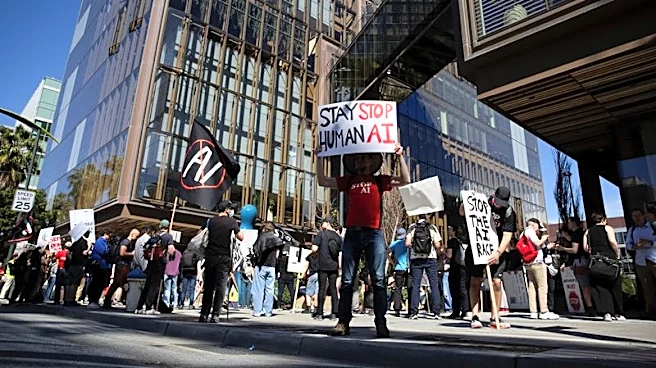
like OpenAI, Google, and Anthropic are forced, either by courts or regulation, to reveal exactly what data they used to train their powerful large language models (LLMs) like ChatGPT and Claude. For years, the answer has been a vague “a vast portion of the public internet.” Disclosure Day is when the receipts are finally shown. The pressure is mounting. The New York Times, along with numerous authors and artists, has filed high-profile lawsuits alleging massive copyright infringement. They argue that their work, representing decades of labor and investment, was scraped without permission or payment to build multi-billion-dollar products. As these cases progress, the demand for a full accounting of training data grows louder, setting the stage for a dramatic shift in how we view the information we all post online.
The Internet as an All-You-Can-Eat Buffet
To understand why this matters, you have to think of the internet of the last 15 years as a giant, free-for-all buffet. Every blog post, tweet, Reddit comment, Flickr photo, and personal website was a dish available for the taking. AI developers, in a race to build the smartest models, essentially scraped this entire buffet to feed their algorithms. The more data they consumed—the good, the bad, and the weird—the more human-like their AIs became. For a long time, this happened in the background, a technical detail few understood or cared about. But the public release of sophisticated tools like ChatGPT changed everything. Suddenly, everyone could see the output: coherent essays, passable art, and functional code. Creators and publishers immediately recognized the style, tone, and substance of their own work, and they began asking a simple question: “Did you use my stuff to build this, and if so, where’s my cut?” This tension—between tech’s long-held “move fast and break things” ethos and the fundamental principles of copyright—is the core of the conflict.
From Public Square to Private Fuel
This isn’t just about big media companies. It’s about anyone who has ever contributed to the public internet. That thoughtful movie review you wrote on your blog? It likely taught an AI how to be a critic. Those photos of your trip to the Grand Canyon? They may have helped an image generator understand landscapes. The very concept of a “public square” has been quietly reframed. Your public contributions were no longer just for human conversation; they were raw material, fuel for a new industrial revolution. This realization is unsettling for many. It changes the social contract of being online. Most users implicitly accepted that their public data might be seen by other people or indexed by a search engine. They did not, however, consent to their digital footprint being used to train a commercial product that could one day devalue or even replace their own creative or professional work. Disclosure Day would make this transaction explicit, transforming abstract unease into a concrete list of who took what.
The Block Button Gets a Promotion
This is where old-school blocking makes its radical comeback. Once we know which companies and associated data-scraping bots hoovered up the web, the block button becomes a tool of data sovereignty. It won’t retroactively pull your content out of ChatGPT-4, but it’s a powerful way to opt out of the *next* round of training. It’s about drawing a line in the sand for GPT-5 and beyond. Creators are already compiling and sharing lists of bots and IP addresses associated with AI companies, encouraging mass blocking campaigns. The act of blocking is no longer just about silencing a troll or an annoying ex. It’s about proactively denying AI companies access to your future work. It’s a vote with a click, signaling that you refuse to be passive fuel for the next generation of models. In a digital world that often feels like it’s happening *to* us, blocking becomes a rare, tangible act of agency—a way to put a lock on your corner of the internet.