









The Architecture of Anxiety
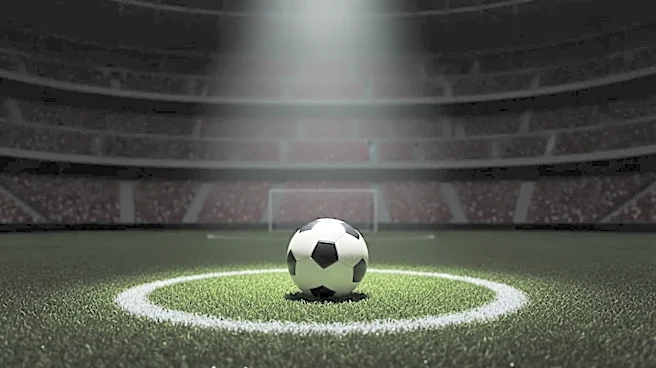
Not all stadiums are created equal when it comes to intimidation. The design of a venue plays a critical role in amplifying or dampening crowd noise. Steeply raked stands, like those at Valencia's Mestalla or Milan's San Siro, create a wall of sound that
cascades directly onto the pitch. Parabolic roofs, engineered to cover the seating areas, act like giant acoustic mirrors, reflecting cheers and jeers back down, preventing the sound from escaping. This turns a crowd's roar from ambient background noise into a visceral, physical force. For the penalty taker, this engineered chaos isn't just loud; it's disorienting. It’s designed to overwhelm the senses, making the simple act of placing a ball and taking a few steps feel monumental. The player isn't just facing a goalkeeper; they're facing an arena deliberately shaped to be the '12th man'.
The Weight of the Goalposts
As the player places the ball, a strange psychological phenomenon occurs: the goal, an eight-yard-wide target, can feel like it's shrinking. Under extreme stress, the brain's threat-detection system goes into overdrive. The prefrontal cortex, responsible for conscious thought, can become overwhelmed, leading to overthinking a skill that is normally automatic. This is what sports psychologists call “choking.” The player starts consciously monitoring movements that should be instinctive, disrupting muscle memory. Furthermore, research shows that anxious players pay more attention to the goalkeeper, which often leads to them hitting shots closer to the keeper's body, making them more 'saveable'. Every twitch from the keeper, every taunt, adds another layer of cognitive load to an already overloaded brain.
The Ghosts of Penalties Past
A stadium is more than just bricks and mortar; it’s a library of sporting memories. When a player steps up to the spot, they are also stepping into that history. Think of Roberto Baggio at the Rose Bowl in 1994, his miss handing the World Cup to Brazil in the most dramatic fashion. Or John Terry, slipping on the rain-soaked Moscow pitch in the 2008 Champions League final, his miss costing Chelsea their first European crown. These moments become part of a venue's identity. That specific patch of grass carries the weight of past failures and triumphs. For the player, this history can be a heavy burden. The fear of failure—of becoming the next ghost in that stadium's lore—can become stronger than the desire to succeed, a concept known as loss aversion. Studies show players who must score to prevent their team from losing are successful only about 60% of the time, whereas those kicking to win the match convert over 90% of the time.
The Inner Monologue
Ultimately, the external pressures of the venue are filtered through the player’s internal state. The long walk provides ample time for negative thoughts to creep in. Research by sports psychologist Geir Jordet shows that players who rush their routine—placing the ball and shooting in just a few seconds—are far less successful than those who take their time to pause, breathe, and regain a sense of control. The most successful penalty takers use consistent pre-kick routines to create a sense of familiarity and anchor their minds in the present. This process helps override the distractions from the crowd and the consequences of the kick. By focusing on a controllable process, they can quiet the noise, both literally and figuratively. It’s a trainable skill, not an innate trait, to manage the cognitive overload that the venue is designed to create.