


The Core Misunderstanding: Tools for Different Jobs
Let’s clear this up first: a paddle brush and a round brush are not rivals. They are specialists designed for entirely different tasks. Many people grab whichever is clean, assuming one is just a flat version of the other. This is the primary misstep.
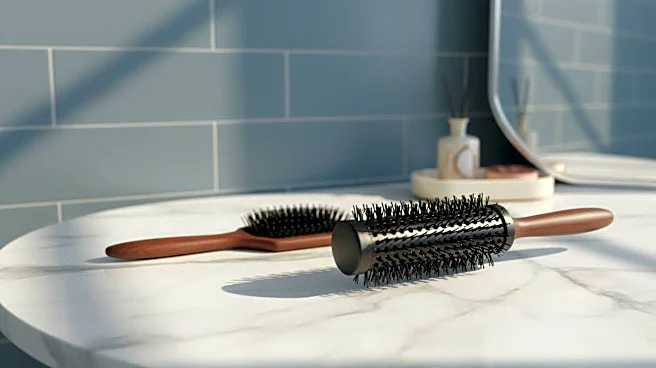
A paddle brush is a maintenance and smoothing tool, best for detangling and creating sleek, straight styles. A round brush, on the other hand, is an active styling tool that works with a blow-dryer to create volume, shape, and movement. Using a round brush to rip through tangles or expecting a paddle brush to give you a bouncy blowout are exercises in frustration. They belong to different mechanical systems; one is for broad, flat alignment, and the other is for creating shape with heat and tension.
The Paddle Brush: Your Go-To for Sleek and Smooth
Think of the paddle brush as your daily grooming workhorse. Its wide, flat surface is designed to cover large sections of hair quickly, making it perfect for detangling and smoothing. The bristles, often set in a soft cushion, move gently through the hair to minimize breakage, especially on long, thick, or straight hair. During a blow-dry, its job isn't to create curls but to achieve a smooth, straight-looking finish. By pulling the brush through hair from root to tip while following with a dryer, you create a sleek, elongated effect. It’s the ideal tool for taming frizz and achieving that polished, 'just-brushed' look with minimal effort. It's also excellent for distributing natural oils from your scalp down the hair shaft, which adds shine and promotes hair health.
The Round Brush: The Architect of Volume and Bounce
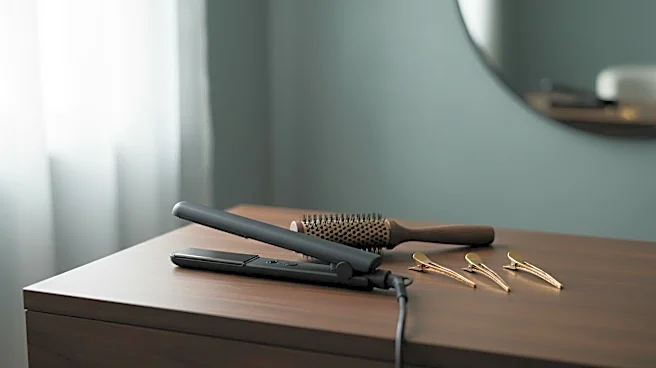
If you want body, lift, or soft waves, the round brush is your essential styling partner. This brush is specifically designed to be used with the heat of a blow-dryer. Its cylindrical barrel allows you to create tension, which is the key to shaping hair. As you pull the brush through a section of hair and apply heat, the barrel heats up—much like a curling iron—to help lock in a curve, wave, or bend. The smaller the barrel, the tighter the curl; the larger the barrel, the more volume and gentle bend you’ll create. This is the tool responsible for the classic salon blowout look, giving hair lift at the roots and a polished, bouncy finish at the ends. It's less for detangling and more for the art of actively shaping and styling damp hair into its final form.
Are You Using the Wrong One?
Here’s a quick diagnostic. You might be misreading your brushes if you're trying to build significant root volume with a paddle brush—it’s designed to flatten and smooth. Or, if you're trying to detangle your wet hair from root to tip with a small-barrel round brush, you're likely causing unnecessary snagging and breakage. A round brush is for styling, not for wrestling with knots. Another common error is using a metal-core round brush on very fine or damaged hair without care, as it can get very hot and cause damage. The goal is to match the tool to the objective. For daily grooming and a sleek finish, grab the paddle brush. For a styled, voluminous blowout, the round brush is your friend.
The Pro Move: Using Both in Sequence
The truly savvy approach isn't choosing one over the other, but knowing when to use each. Many professional stylists use a sequential approach. They might start with a paddle brush on damp hair to do the heavy lifting of detangling and getting the hair mostly dry in a smooth, organized state. Once the hair is prepped and manageable, they switch to a round brush. This second step is for the finishing work: creating lift at the crown, shaping face-framing layers, or adding a polished bend to the ends. This two-brush technique allows each tool to do what it does best, resulting in a more professional, longer-lasting style with less overall stress on your hair.