





A Modest Proposal
By 2011, Woody Allen had settled into a comfortable rhythm, releasing a film nearly every year to a dedicated, if limited, audience. His recent works were a mixed bag of European-set dramas and comedies that performed respectably in arthouse theaters
but rarely crossed over into the mainstream consciousness. Films like 'Vicky Cristina Barcelona' had been critical and modest commercial successes, but no one was betting on an Allen film to become a summer blockbuster. 'Midnight in Paris' arrived with a relatively scant $17 million budget and the usual expectations for a sophisticated, talky feature. The initial release was a classic arthouse strategy: open in just six theaters in New York and Los Angeles and hope for the best. The projections were, by all accounts, tailored to this niche reality.
The Word-of-Mouth Wildfire
Something unusual happened on opening weekend. The film didn't just do well; it posted astronomical numbers. It grossed nearly $600,000 from those six theaters alone, resulting in a per-screen average of almost $100,000—one of the best of the year. The stellar reviews out of the Cannes Film Festival certainly helped, but the real engine of its success was the audience. People weren't just seeing 'Midnight in Paris'; they were falling in love with it and telling everyone they knew. The film's intoxicating blend of romantic nostalgia, picturesque Parisian scenery, and a surprisingly warm and accessible lead performance from Owen Wilson proved to be an irresistible combination. It was a 'feel-good' movie for adults, a charming fantasy that was both smart and sweet—a rare commodity.
An Unprecedented Expansion
Distributor Sony Pictures Classics quickly realized it had a rare phenomenon on its hands. Responding to the overwhelming demand, the studio rapidly expanded the film's theatrical footprint. Within three weeks, it went from six screens to nearly a thousand. It wasn't just succeeding in major coastal cities; the film found an audience everywhere, playing for weeks in small towns and suburban multiplexes. The box office total kept climbing, eventually reaching over $56 million domestically and a stunning $151 million worldwide. This wasn't just a hit; it was, by a huge margin, the highest-grossing film of Woody Allen's entire five-decade career, surpassing the domestic total of his 1986 classic 'Hannah and Her Sisters'.
The Perfect Cultural Cocktail
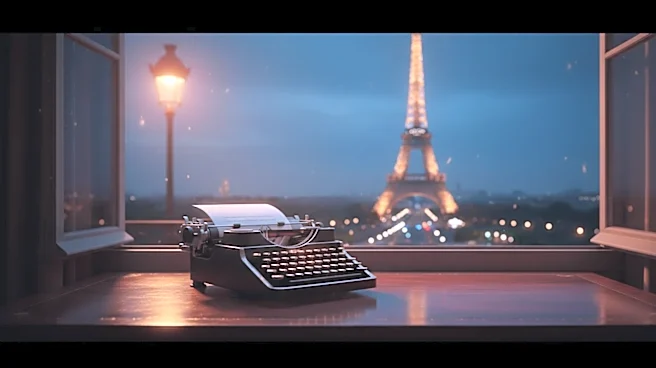
Looking back, the film's success was a perfect storm. Owen Wilson, stepping into the traditional 'Woody Allen role,' shed the usual neurotic anxiety for a more relaxed, everyman wonder that audiences found endearing. The high-concept premise—meeting legends like Hemingway, Picasso, and Gertrude Stein—was executed with a light, playful touch. And the film itself, a lush and unapologetic love letter to Paris, served as a two-hour vacation for audiences. Even Allen himself seemed baffled by the scale of its success, admitting in an interview that he didn't quite understand why this particular film connected so deeply with people. It culminated in four Academy Award nominations, including Best Picture, and a win for Allen for Best Original Screenplay—his first Oscar in 25 years.