





The Illusion of Sameness
On paper, the connection is obvious. In both basketball and soccer, a rules infraction grants the wronged team an uncontested opportunity. The clock is frozen, the defense is neutralized (mostly), and the outcome hinges on a single, focused action. For
the casual viewer, it’s a moment of manufactured drama—a brief pause in the chaotic flow of the game for a high-stakes, one-on-one challenge. Both are penalties designed to restore a lost scoring opportunity. They are the sports equivalent of a do-over, a controlled environment where justice can be served. This shared DNA as a ‘set piece’ is what makes the comparison so tempting. But it's also where the useful similarities end and the fundamental, philosophical differences between the two sports begin to shine through.
The Loneliest Shot in Sports
The free throw is an act of profound isolation. A player stands at the charity stripe, 15 feet from the hoop, utterly alone. Teammates and opponents line the lane, but they are scenery, not participants. They cannot help, they cannot interfere (beyond a bit of trash talk). The challenge is purely internal: a test of muscle memory, focus, and nerve. Every top player has a ritual—a specific number of dribbles, a spin of the ball, a deep breath—designed to block out the screaming crowd and the weight of the moment. The basket is a fixed target, the distance never changes, and the task is binary: make or miss. Because of this, the free throw becomes a referendum on an individual’s composure. It’s a closed system, a lab experiment in clutch performance. A miss isn’t a failure of strategy; it’s a personal, mechanical, or mental lapse.
The Orchestrated Chess Match
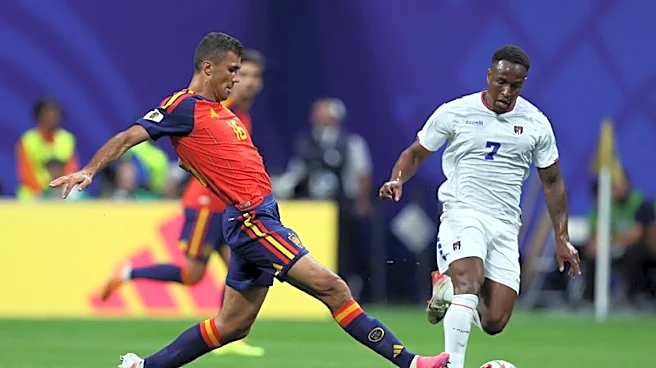
A free kick, by contrast, is a team endeavor disguised as an individual moment. The player over the ball is merely the conductor of an orchestra of moving parts. Is it a direct shot on goal, a curling effort over the defensive wall? Or is it a feint? A short pass to a teammate making a clever run? A chipped ball to the back post for a waiting header? The possibilities are nearly endless. The defense isn’t passive scenery; it’s an active participant, forming a human wall and marking attackers. The free kick is a dynamic, tactical puzzle. It involves deception, timing, and collective understanding. Even a direct shot requires teammates to position themselves for a potential rebound. It's not a closed system but an open one, full of variables. The success or failure of a free kick is a reflection of team strategy and execution, not just one player’s nerve.
Frequency, Value, and Game Flow
Another crucial divergence is their impact on the game’s rhythm and economy. Free throws are a constant, attritional feature of basketball. It’s not uncommon for a team to shoot 20-30 in a game. They are the background hum of scoring, a steady drip that keeps the scoreboard ticking. A made free throw is an expectation; a miss is a notable failure. A direct free kick in a dangerous scoring position, however, is a rare and precious event in soccer. A team might only get one or two per game, if they’re lucky. This scarcity elevates its importance. While a free throw is a routine point, a goal from a free kick is a spectacular, game-changing highlight that can decide a match. One is a matter of accumulation; the other is a moment of punctuation.
The Nature of the Punishment
Finally, consider the fouls that lead to them. In basketball, many fouls that result in free throws are tactical—a deliberate grab to prevent an easy layup, knowing the opponent might only make one of two shots. It’s a calculated risk. In soccer, a foul that grants a prime free kick is often an act of desperation or blatant cynicism, and it frequently comes with the added penalty of a yellow or red card. The consequence isn’t just the kick itself, but the potential for the offending player to be sent off, crippling their team for the rest of the match. The free kick, therefore, often carries a double punishment that alters the entire strategic landscape in a way a common basketball foul rarely does.